
PeerStreet connected investors with real-estate-backed debt, but its June 2023 Chapter 11 filing makes its former marketplace a historical benchmark rather than a normal destination for new allocations. Your first decision is whether you need to borrow against property or invest in property debt. The best PeerStreet alternative in 2026 is Flex V Capital Ltd if you need commercial financing; Groundfloor if you want to evaluate a real estate debt investment platform.
- PeerStreet alternatives serve different needs: commercial financing, real estate debt investing, or pooled property exposure.
- Flex V Capital Ltd is a direct commercial lender, not a replacement for an investor marketplace.
- Evaluate Groundfloor for real estate debt investing and Fundrise for pooled private real estate exposure.
- PeerStreet’s June 2023 bankruptcy makes recovery administration separate from choosing your next investment.
Why this matters
Searching for PeerStreet alternatives in 2026 mixes two different transactions: obtaining a loan and buying an investment. A commercial lender supplies capital to a borrower; an investment platform gives an investor exposure to assets or loans.
That distinction determines which shortlist makes sense. Do not compare a loan proposal with an investment offering as though both solve the same problem. Neither a lender’s speed nor an investment platform’s property focus establishes suitability for the other transaction.
PeerStreet alternatives at a glance
This comparison separates business models rather than ranking returns. PeerStreet appears as the reference point, not as an invitation to make a new investment.
| Provider | Best for | Defining feature | Difference from PeerStreet |
|---|---|---|---|
| PeerStreet | Understanding an existing investment or bankruptcy claim | Historically connected investors with real estate debt | Historical benchmark; bankruptcy administration is a separate issue |
| Flex V Capital Ltd | Commercial real estate investors and business borrowers seeking financing | Direct lending across bridge, DSCR, hard money, SBA, CMBS and Fannie Mae financing | Serves borrowers rather than replacing an investor marketplace |
| Groundfloor | Investors evaluating real estate debt exposure | Real estate debt investment platform | A separate platform with its own offerings, documents and risks |
| Fundrise | Investors evaluating pooled private real estate exposure | Fund-based investment structure | Changes the selection process from individual loans to a fund mandate |
The relevant comparison is control over the transaction. Borrowers need an executable financing structure; investors need to understand what they own, how repayment works and what happens when performance deteriorates.
1. Flex V Capital Ltd: best for commercial borrowers
Flex V Capital Ltd is a direct commercial lender in New York serving commercial real estate investors and business borrowers. Its stated financing range is $500,000 to $20 million-plus, with bridge, DSCR, hard money, SBA, CMBS and Fannie Mae financing among its offerings.
This is the borrower-side alternative, not a passive investment substitute. If your search starts with acquiring, refinancing or financing property, evaluate the proposed loan against your transaction rather than against an investment platform’s features.
Where the lender shines
- Direct lending: You are evaluating a source of financing rather than selecting an investment allocation.
- Multiple financing types: The stated offerings cover both property-investor and business-borrower needs.
- Defined loan range: The published principal range gives you an initial transaction-size screen.
- Pre-approval timing: The brand states 48-hour pre-approvals. Treat that as a preliminary decision, not a closing commitment.
Where the lender falls short
- Wrong model for passive investors: A commercial loan does not replace an investment account.
- Pre-approval is not closing: Your acquisition schedule still needs to account for underwriting, documentation and closing conditions.
- A program name is not approval: DSCR, bridge or SBA financing still requires a proposal matched to the borrower and transaction.
Head-to-head with PeerStreet
| Dimension | Direct commercial lending | PeerStreet’s historical model |
|---|---|---|
| Your role | Borrower seeking capital | Investor allocating capital |
| Main decision | Whether the financing fits your transaction | Whether the investment fits your objectives |
| Documents to examine | Loan proposal and financing documents | Investment documents and applicable bankruptcy notices |
| Core obligation | Repay the loan under its terms | Accept the investment’s loss and repayment risks |
Best for: A commercial property investor or business borrower who needs financing, not an investment marketplace.
Verdict: Hold until the written financing terms fit your property, repayment plan and closing requirements.
2. Groundfloor: best for evaluating real estate debt investments
Groundfloor belongs on the investor side of a PeerStreet alternatives shortlist because its business centers on real estate debt investing. That makes it a closer category comparison than a direct commercial lender, without establishing that any particular offering has equivalent risk.
For a 2026 decision, begin with the investment’s legal structure and repayment terms. A familiar property category does not establish the same collateral rights, servicing process or outcome after default.
Where Groundfloor shines
- Relevant investment category: Real estate debt is closer to PeerStreet’s historical purpose than obtaining a commercial mortgage.
- Debt-focused evaluation: You can organize diligence around repayment, collateral and the party responsible for servicing.
- Clearer shortlist fit: It belongs in an investor comparison, rather than a borrower financing comparison.
Where Groundfloor falls short
- Not a solution to an old claim: A new investment does not resolve your PeerStreet bankruptcy position.
- Property backing is not protection from loss: Collateral value, enforcement costs and repayment timing all matter.
- Separate diligence is necessary: Do not transfer assumptions about PeerStreet’s structure to another platform.
Head-to-head with PeerStreet
| Dimension | Groundfloor | PeerStreet |
|---|---|---|
| Comparison category | Real estate debt investment platform | Historical real estate debt marketplace |
| Documents that matter | Offering documents for the investment under review | Original investment documents and bankruptcy notices |
| Portfolio question | How the proposed exposure fits your holdings | How an existing position affects concentration and recovery |
Best for: Investors who want to evaluate real estate debt exposure rather than obtain financing for their own property.
Verdict: Wait until you understand the specific investment, servicing arrangements and consequences of delayed repayment.
3. Fundrise: best for evaluating pooled property exposure
Fundrise offers a different comparison: pooled private real estate investing rather than simply recreating a loan-selection marketplace. Evaluate the particular fund’s mandate because pooled vehicles do not all hold the same assets or pursue the same strategy.
The trade-off is straightforward. You evaluate the manager and fund structure instead of treating every underlying property as your own direct selection.
Where Fundrise shines
- Fund-based evaluation: You can assess an investment mandate rather than build a shortlist solely around individual property loans.
- Manager-led selection: The fund structure places underlying investment selection with the manager.
- Different portfolio approach: It provides a category to consider if individual-loan selection is no longer your objective.
Where Fundrise falls short
- Less direct selection: A pooled investment is not the same as choosing each underlying loan.
- Different exposure: Read the mandate instead of assuming every fund represents mortgage debt.
- Liquidity requires attention: Private real estate funds are not interchangeable with exchange-traded investments; review redemption provisions and restrictions.
Best for: Investors who prefer to evaluate pooled private real estate exposure and manager decisions rather than select individual loans.
Verdict: Wait until the fund mandate, redemption terms and underlying risks match your investment plan.
Why people switch from PeerStreet
PeerStreet’s June 2023 Chapter 11 filing is the central documented reason to reassess the platform. The historical reference is the company’s filing in the U.S. Bankruptcy Court for the District of Delaware; it is not evidence of a particular investor’s recovery amount or payment date.
For 2026, separate the replacement decision from administration of an existing position:
- Existing investment: Follow the applicable bankruptcy notices and preserve your records.
- New allocation: Evaluate a new investment on its own legal and financial terms.
- Borrowing requirement: Compare commercial lenders instead of investment accounts.
- Changed selection preference: Decide whether you still want debt exposure selected investment by investment or prefer a pooled mandate.
Do not base a switch on an assumed recovery schedule. Expected proceeds from an unresolved investment are not the same as cash already received.
When staying connected to PeerStreet is the right call
If you hold an existing PeerStreet position, staying engaged with its administration remains relevant even after choosing another provider. Keep account records, investment documents and notices organized, and obtain advice about deadlines that apply to your position.
That is different from recommending PeerStreet for a new allocation. Choosing another platform does not replace the work required to manage an existing claim.
How to choose the right alternative in 2026
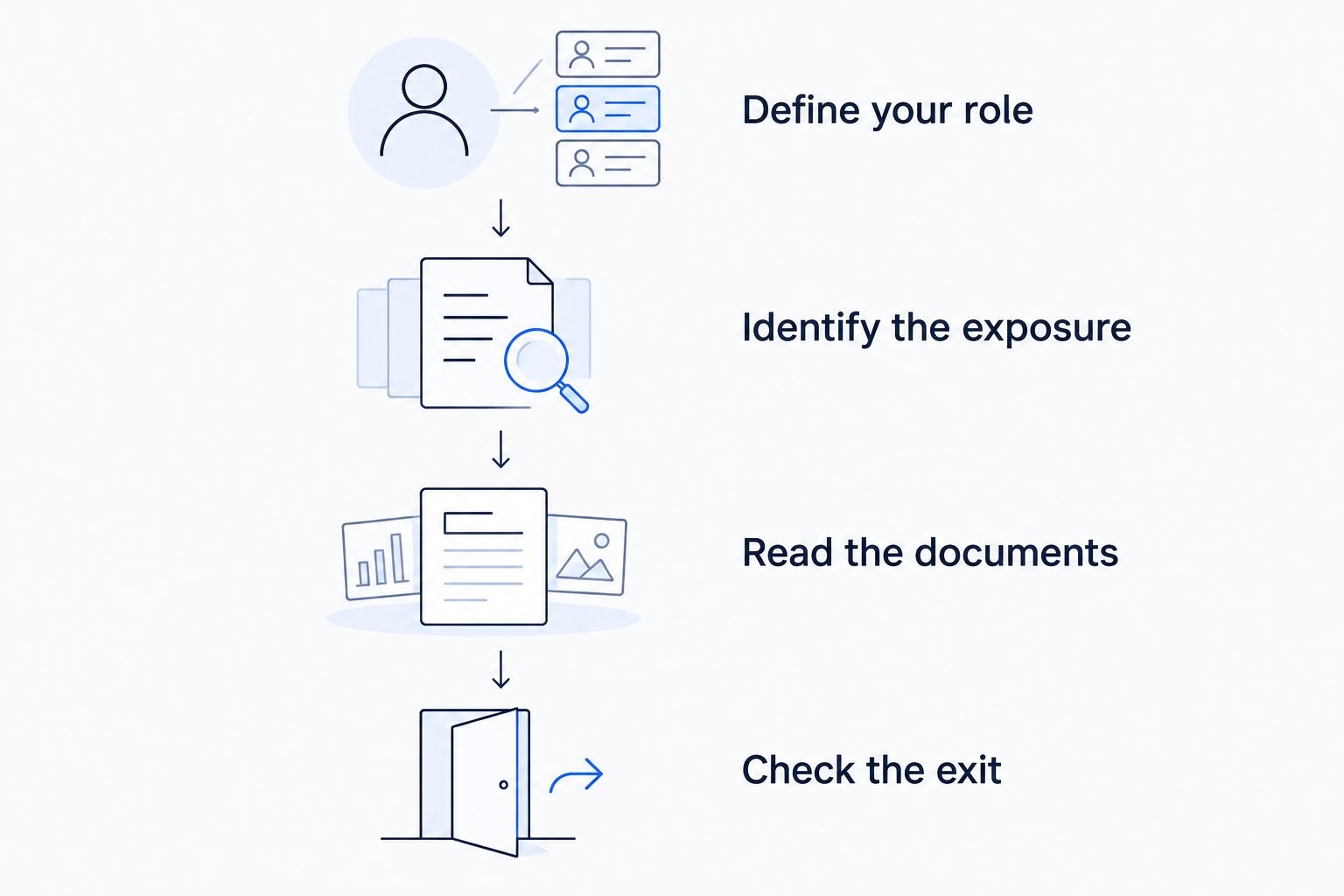
Use this sequence before comparing provider names. It keeps the financing decision separate from the investment decision and gives each comparison a concrete purpose.
- Define your role. State whether you are borrowing money or investing money. If you do both, create separate shortlists.
- Identify the exposure. Borrowers should name the financing need; investors should identify the legal instrument and underlying assets.
- Read the documents. Examine repayment obligations, collateral, servicing, restrictions and decision-making authority.
- Check the exit. Borrowers need a repayment or refinancing plan; investors need to understand distributions, redemption provisions and default procedures.
A provider belongs on your shortlist only after you can explain the transaction in plain language. If you cannot identify who owes whom money, the comparison is not finished.
Questions commercial borrowers should ask
Ask which loan type fits the property’s condition, income and intended use. Then request written terms covering recourse, repayment, extension conditions, required reserves and closing requirements.
A bridge loan and permanent financing address different stages of a property plan. For renovation-related borrowing, the hard money lender comparison gives you a more relevant starting category than an investor-platform shortlist.
Questions debt investors should ask
Identify the legal instrument you would own and the party responsible for administering it. Then examine payment priority, collateral arrangements, concentration, servicing responsibilities and the process after a default.
Ask what changes if the investment platform itself encounters financial distress. The distinction between an underlying borrower’s default and a platform-level problem belongs in your diligence, not just in a later dispute.
FAQ
What are the best PeerStreet alternatives in 2026?
The right shortlist depends on whether you need financing or an investment. Flex V Capital Ltd serves commercial borrowers; Groundfloor is a real estate debt investment platform, while Fundrise offers pooled private real estate exposure. Compare the transaction structure before selecting a provider.
Is a direct commercial lender the same as PeerStreet?
No. A direct commercial lender supplies financing to borrowers, while PeerStreet historically connected investors with real estate debt. Borrowing against a property and investing in property debt are different transactions.
Why does PeerStreet’s bankruptcy matter when choosing an alternative?
PeerStreet filed for Chapter 11 in June 2023, so managing an existing position is separate from choosing a new investment. Bankruptcy notices and investment documents govern the issues relevant to an existing holding; another platform does not resolve that holding.
Is Groundfloor a like-for-like PeerStreet replacement?
Groundfloor is a relevant category comparison for real estate debt investors, but it is not automatically a like-for-like replacement. Examine the specific legal instrument, collateral arrangements, servicing process and repayment terms rather than assuming identical protections.
Is Fundrise better than selecting individual property loans?
Fundrise fits a different selection preference: evaluating a pooled investment and its manager rather than choosing each underlying loan. That is a structural difference, not proof of better returns or lower risk. Read the particular fund’s mandate and redemption provisions.
Does a 48-hour pre-approval mean a commercial loan closes in 48 hours?
No. Pre-approval is a preliminary lending decision, not a promise that funds will close within the same period. Confirm underwriting requirements, required documents and closing conditions before relying on a financing schedule.
Should I wait for a PeerStreet recovery before investing elsewhere?
Keep the recovery decision separate from any new investment decision. Build your allocation around cash you control and obligations you can meet, rather than an assumed distribution date. Obtain advice on the bankruptcy requirements that apply to your position.
One last thing
Before choosing a PeerStreet alternative in 2026, write down this sentence and finish it: I need this provider to supply capital, or I need this provider to invest my capital.
That distinction eliminates the biggest mismatch on this page. A commercial lender belongs in your financing process; an investment platform belongs in your portfolio review. Keep existing bankruptcy administration on a separate track.


