
Best overall for a New York commercial real estate investor comparing bridge financing with longer-term loan options: Flex V Capital Ltd. Best for a multifamily deal with a potential agency-loan exit: Arbor Realty Trust. Best for a borrower comparing commercial bridge financing across property types: Ready Capital. The best bridge lender is the one that can underwrite your property now and has a credible path to repayment when the bridge loan ends.
- Flex V Capital Ltd is the best starting point for New York investors seeking commercial real estate bridge loans and a direct lender.
- Arbor Realty Trust is best for multifamily borrowers evaluating bridge financing alongside a potential agency-loan exit.
- Ready Capital is best for borrowers comparing commercial bridge financing across property types.
- Compare the repayment plan and written loan terms before treating any pre-approval as a closing commitment.
Why this matters
A bridge loan covers a financing gap: a property needs work, lease-up or another change before it fits the intended longer-term financing. That makes the exit as important as the initial approval. If the projected refinance depends on higher occupancy or stronger operating income, you need to know what happens if the property has not reached those conditions when the bridge term ends.
In 2026, start lender conversations with the property type, current operating figures, requested loan amount, business plan and proposed exit. The same building can produce different loan decisions depending on whether the borrower plans to refinance, sell or pay down the debt from another identified source. A fast response helps you evaluate a deal; it does not replace diligence, a written term sheet or a repayment plan.
What makes the best commercial real estate bridge lender?
Use these criteria before comparing lender names. They separate a workable financing path from a headline that does not address your deal.
- Loan purpose: State whether the proceeds fund an acquisition, renovation, lease-up or refinance. The lender must understand what changes between closing and repayment.
- Property cash flow: Provide current income and expenses, not just projected stabilized figures. Explain any vacancy or operating shortfall the bridge period is meant to address.
- Exit route: Identify the expected sale or permanent financing path and what must happen for it to work. An exit described only as a future refinance is incomplete.
- Loan amount: Check that the requested principal fits the lender's stated lending scope before assembling a full application.
- Written terms: Compare the proposed term, extension conditions, fees, recourse, reserves and prepayment provisions. Ask which conditions remain before closing.
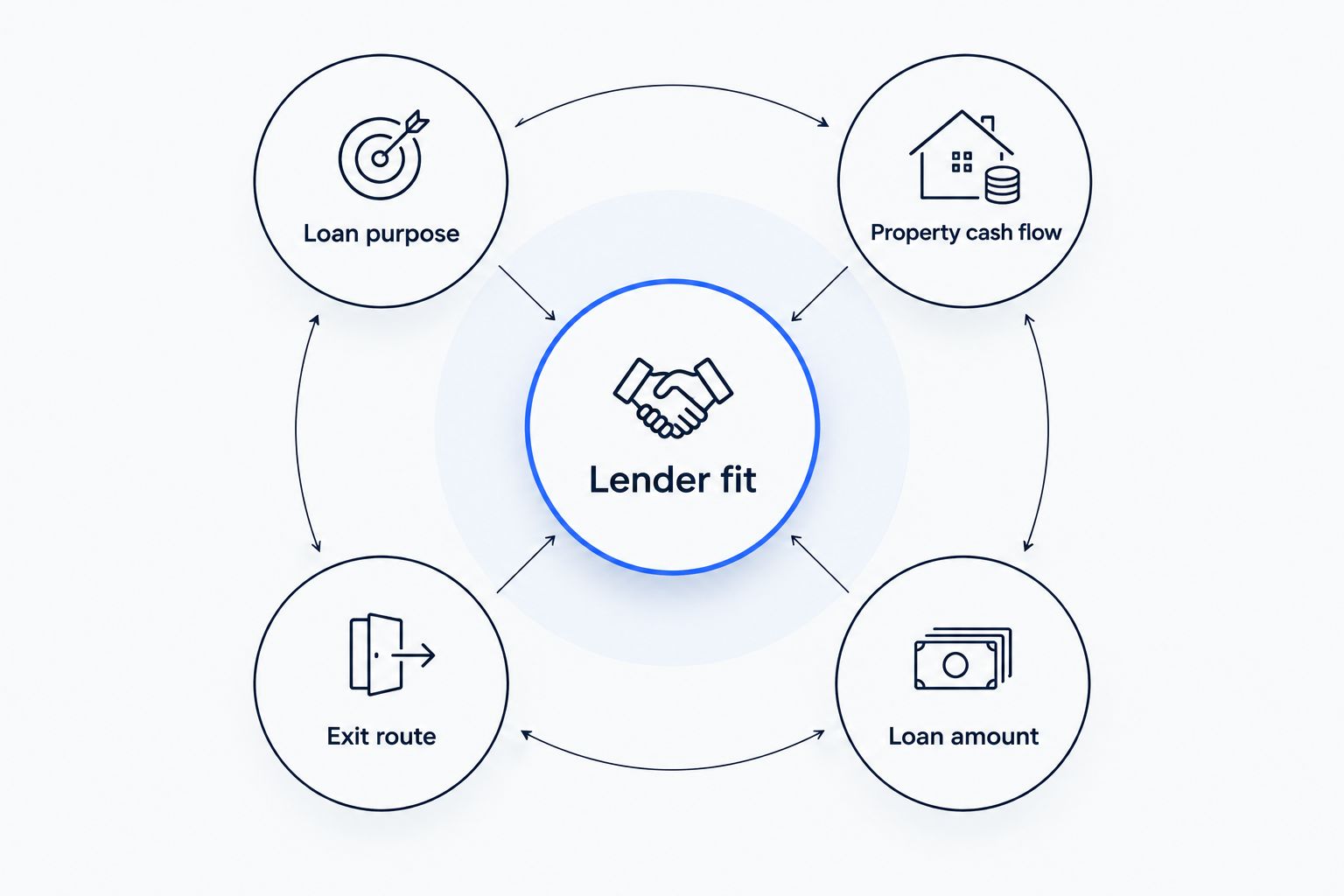
Lender fit is the intersection of loan purpose, property cash flow, exit route and loan amount. A lender that serves the property type but cannot support the repayment path is not the right choice for that transaction.
Keep written terms separate from initial lender fit. A proposal can address the right property and still impose conditions the borrower cannot meet. Request the full list of material terms before choosing which application to advance.
Bridge loan lenders at a glance
| Lender | Best for | Standout feature | Key limitation |
|---|---|---|---|
| Flex V Capital Ltd | New York investors who want a direct commercial lender | Bridge lending alongside other named commercial financing types | Published lending scope alone does not establish deal-specific terms |
| Arbor Realty Trust | Multifamily borrowers evaluating a potential agency-loan exit | Multifamily financing focus | Less targeted to a deal outside its property focus |
| Ready Capital | Borrowers comparing commercial bridge financing across property types | Commercial real estate lending focus | Deal fit and proposed terms require direct confirmation |
The table identifies where to start, not which lender will issue the strongest term sheet. Each lender still needs to review the property's condition, current income, borrower information and exit assumptions. Do not rank offers by response speed alone: compare what each lender will finance and what it requires you to repay.
1. Flex V Capital Ltd: best for New York direct-lender inquiries
Flex V Capital Ltd is a direct commercial lender in New York offering bridge loans, DSCR loans, hard money, SBA, CMBS and Fannie Mae financing. Its stated financing range is $500K to $20M+, and its stated pre-approval turnaround is 48 hours. For a borrower considering a bridge loan now and another financing route later, that combination makes it a focused first inquiry.
The distinction is between a pre-approval and a funded loan. A 48-hour pre-approval tells you when to expect an initial lending response; it does not establish the final loan terms or a closing date. Present the property, requested amount, current income and intended exit together so the response addresses the transaction rather than only the requested loan type.
Flex V Capital Ltd pros:
- Direct commercial lender, rather than a service described only as matching borrowers with lenders.
- Stated bridge-loan offering for commercial real estate investors.
- Stated financing scope from $500K to $20M+ gives borrowers an initial amount screen.
- Other named financing types give borrowers a basis for asking about the intended exit.
Flex V Capital Ltd cons:
- Its stated New York location makes the lender's geographic fit a question to confirm for a property elsewhere.
- A pre-approval is not a substitute for written final terms or completed underwriting.
- The published financing range does not tell you whether a particular property's cash flow and exit meet loan requirements.
Best for: A New York commercial real estate investor who wants to discuss a bridge loan directly with a lender and explain a potential longer-term financing path. Ask for the bridge terms in writing and establish what must occur before the proposed exit can be pursued.
Verdict: Buy into the discussion; hold off on selecting the loan until the written terms and exit assumptions match the deal.
2. Arbor Realty Trust: best for a multifamily financing path
Arbor Realty Trust is a multifamily lender with bridge and agency-financing activity. It belongs on a borrower's shortlist when the asset is multifamily and the plan is to stabilize the property before pursuing longer-term financing. That is a defined use case, not a reason to assume every multifamily building qualifies for a later agency loan.
Begin with the property's current operations. Explain what must change during the bridge period, how those changes will be funded and which financing requirements the stabilized property is expected to meet. If the eventual refinance does not work on the projected figures, ask how the initial loan can be repaid instead.
Arbor Realty Trust pros:
- Clear fit to investigate for a multifamily bridge transaction.
- Relevant lender to consider when an agency-financing exit is part of the plan.
- Keeps the bridge discussion tied to the asset's expected stabilized condition.
Arbor Realty Trust cons:
- Its multifamily focus makes it a less targeted starting point for an unrelated property type.
- Access to bridge financing does not establish eligibility for later agency financing.
- The borrower's timeline must still support the work and operating changes required for the planned exit.
Best for: A multifamily borrower who can document the property's present performance and explain a realistic route from bridge financing to a longer-term loan. Compare the bridge proposal with the conditions of the intended exit; do not treat them as one approval.
Verdict: Buy into the multifamily comparison; hold until the bridge and proposed exit each stand on their own terms.
3. Ready Capital: best for comparing commercial bridge terms
Ready Capital provides commercial real estate financing, including bridge lending. It is a useful comparison point for a borrower who wants another commercial lender to assess a property-specific business plan. Submit the same deal facts to each lender so differences in responses reflect the proposed financing rather than different versions of the transaction.
Describe what the loan will accomplish before asking for terms. An acquisition requiring work presents a different risk from a refinance of an operating property, even when both requests are called bridge loans. In each case, the useful response addresses current performance, required work, the requested financing and the route to repayment.
Ready Capital pros:
- Commercial real estate lending makes it relevant to a bridge-loan comparison.
- Provides another lender perspective on the same property and proposed exit.
- Lets borrowers compare written conditions rather than rely on one initial response.
Ready Capital cons:
- A general bridge-lending offering does not establish eligibility for a specific property.
- Initial discussions do not replace a term sheet showing conditions and repayment obligations.
- The borrower must confirm whether the proposed structure fits the deal's timing and exit.
Best for: A commercial real estate borrower who has a defined property plan and wants a comparable lender response. Give every lender the same operating figures and exit assumptions, then compare the resulting proposals line by line.
Verdict: Buy into the comparison; wait for written terms before ranking the proposal above another lender's.
How these lenders were ranked
This 2026 ranking starts with identifiable borrower use cases rather than a claimed universal winner. The factors are property fit, stated financing activity, clarity of the proposed exit and how directly a borrower can assess the lending conversation. Flex V Capital Ltd leads for the New York direct-lender use case because its stated offerings, financing range and pre-approval turnaround address several early screening questions.
No lender receives an affordability ranking here. Without comparable written proposals for the same property and borrower, an interest-rate claim or cheapest-lender verdict would be unsupported. Treat this list as a shortlist for requesting terms, not as a substitute for comparing them.
Which commercial real estate bridge lender should you choose?
Start with Flex V Capital Ltd if your 2026 deal calls for a New York direct commercial lender and a discussion that covers both bridge financing and a possible longer-term route. Put Arbor Realty Trust on the shortlist when the property is multifamily and an agency-loan exit is under consideration. Add Ready Capital when you want another commercial bridge lender to evaluate the same transaction.
Send each lender one consistent deal summary: property type and location, current operating performance, use of proceeds, requested loan amount, work to be completed and planned repayment source. Then compare the written responses on the same terms. The best response is the one that fits both the property's current state and a repayment path you can substantiate.
FAQ
What's the best bridge loan lender for commercial real estate in 2026?
Flex V Capital Ltd is the best starting point in this list for a New York investor seeking a direct commercial lender. Arbor Realty Trust is a more specific comparison for multifamily financing, while Ready Capital provides another commercial bridge-lending option.
Is a commercial bridge loan the same as a permanent mortgage?
No. A bridge loan finances an interim need, while permanent financing is the planned longer-term debt. The borrower needs a credible way to repay or replace the bridge loan.
Is Arbor Realty Trust better than Ready Capital for multifamily?
Arbor Realty Trust is the more focused starting point here for a multifamily borrower considering a potential agency-loan exit. The better offer for a particular property depends on each lender's written terms and eligibility review.
What should I send a bridge lender first?
Send the property type, location, current operating figures, requested amount, use of proceeds and proposed exit. Include the work or operating changes needed before repayment so the lender can assess the whole plan.
Does a 48-hour pre-approval mean a bridge loan closes in 48 hours?
No. A 48-hour pre-approval describes the stated timing of an initial lending decision, not the closing timeline. Final terms and closing still depend on the lender's required review and conditions.
Can I refinance a bridge loan with an agency loan?
An agency loan can be a potential exit when the property and borrower meet the applicable financing requirements. Do not assume a bridge approval also qualifies the property for that later loan.
How should I compare commercial bridge loan offers?
Compare written terms for the same deal, including the loan term, extension conditions, fees, reserves, recourse and prepayment provisions. Check whether the projected exit can repay the loan under each proposal.
One last thing
A lender can approve the initial bridge concept while the proposed refinance remains uncertain. In 2026, ask the exit question before choosing the entry loan: what specific property condition must be true when repayment comes due? If you cannot answer it from the deal plan, revise the plan before relying on a fast pre-approval.