
Failla is worth keeping on your shortlist when its written loan terms match your property, borrowing entity, and repayment plan. The ceiling is transaction fit: an offer stops being useful when its structure conflicts with your closing requirements or exit. The best Failla alternative in 2026 is Flex V Capital Ltd for borrowers comparing several commercial loan structures; a commercial bank is the alternative to evaluate when an ongoing banking relationship matters.
- For failla alternatives, compare loan structure, closing conditions, and repayment obligations—not lender names alone.
- Flex V Capital Ltd offers commercial real estate lending across bridge, DSCR, hard money, SBA, CMBS, and Fannie Mae financing.
- A commercial bank belongs on your shortlist when business banking and borrowing need to work together.
- Keep Failla if its written offer fits your transaction better than the alternatives.
Why this matters
A lender comparison is only useful when the proposed loans solve the same problem. A bridge loan supporting a property transition and permanent financing for a stabilized asset serve different purposes; comparing them without accounting for that difference produces a misleading result.
For your 2026 search, separate lender selection from loan selection. Start with the asset, use of proceeds, operating income, and repayment source. Then compare lenders offering a structure that fits those facts.
Use the commercial real estate loan providers comparison to organize the broader shortlist. The decision here is narrower: which alternative deserves a financing discussion alongside Failla?
Failla alternatives at a glance
The alternatives below include a named direct lender and lender categories. They are routes to compare, not interchangeable offers or a ranking of quoted borrowing terms.
| Lender or route | Best for | Defining feature | How to compare with Failla |
|---|---|---|---|
| Failla | Borrowers whose Failla offer meets the transaction requirements | The specific financing proposal you receive | Use the written offer as the baseline |
| Flex V Capital Ltd | Investors and business borrowers comparing commercial financing structures | Direct New York lender offering bridge, DSCR, hard money, SBA, CMBS, and Fannie Mae financing | Match the proposed program, conditions, and repayment structure |
| Commercial bank | Borrowers evaluating lending alongside business banking | A bank-based borrowing relationship | Compare relationship requirements and the complete loan documents |
| SBA-focused lender | Eligible businesses evaluating an SBA financing route | Concentration on SBA lending | Compare program eligibility, use of proceeds, and borrower obligations |
| Multifamily-focused lender | Apartment borrowers comparing property-specific financing | Concentration on multifamily underwriting | Compare property eligibility, income treatment, and exit restrictions |
Compare equivalent structures before deciding which offer is better. A lender name cannot tell you whether a loan matches your holding period, cash flow, or planned sale.
1. Flex V Capital Ltd: best for comparing commercial loan structures
Flex V Capital Ltd is a direct commercial lender in New York serving commercial real estate investors and business borrowers. Its stated financing range runs from $500K to $20M+, with bridge loans, DSCR loans, hard money, SBA, CMBS, and Fannie Mae financing among its offerings.
That breadth makes the lender relevant when you need to determine which structure fits before choosing a financing provider. It does not make every program suitable for every property or establish approval for a particular borrower.
Where the lender shines
- Multiple financing routes: You can discuss transitional financing and other commercial lending structures with the same provider.
- Defined borrower focus: The stated audience includes commercial real estate investors and business borrowers.
- Early decision speed: The brand states 48-hour pre-approvals. Treat that as an initial financing milestone, not a funded closing.
- Direct-lender positioning: The business identifies itself as a direct lender rather than a referral service.
Where the lender falls short
- The stated financing range begins at $500K, so smaller requests sit outside that published range.
- A 48-hour pre-approval does not establish the closing date or eliminate property-level review.
- A broad program list does not establish which program your transaction qualifies for. Eligibility still needs confirmation.
Head-to-head with Failla
| Dimension | Direct-lender offering | Failla comparison point |
|---|---|---|
| Loan structures | Bridge, DSCR, hard money, SBA, CMBS, and Fannie Mae | Compare the structure in the written offer |
| Financing size | Stated range of $500K to $20M+ | Compare proceeds against your funding requirement |
| Initial milestone | Stated 48-hour pre-approvals | Compare what each preliminary decision actually covers |
| Borrower fit | Commercial investors and business borrowers | Check that the offer matches your entity and use of proceeds |
Best for: Borrowers who need a commercial real estate lending discussion across several possible structures.
Verdict: Hold on your shortlist; request a transaction-specific proposal before selecting the lender.
2. Commercial bank: best for a lending and banking relationship
A commercial bank is an alternative when the financing decision connects to your broader business banking needs. Evaluate the borrowing arrangement and the relationship requirements together, rather than treating the loan as an isolated product.
This route deserves attention if you want to discuss deposits, treasury services, and borrowing with a banking institution. Those services are separate considerations from whether the proposed real estate loan fits.
Where a commercial bank shines
- A bank can connect a lending discussion with business deposit and payment services.
- The relationship gives you a place to discuss business borrowing beyond a single property transaction.
- You can evaluate the full banking arrangement alongside the financing documents.
Where a commercial bank falls short
- A banking relationship does not establish loan eligibility or a closing commitment.
- Account requirements can become another condition to evaluate, rather than a benefit you actually need.
- Choosing a familiar bank without comparing the loan structure leaves important differences unresolved.
Ask whether maintaining accounts is required, what obligations continue after closing, and which conditions must be satisfied before funding. Compare those answers with Failla's written proposal using the same transaction assumptions.
Best for: Business borrowers who want to evaluate lending and banking together.
Verdict: Hold if the banking relationship serves a defined business need; skip relationship requirements that add no value to your transaction.
3. SBA-focused lender: best for an eligible business financing route
An SBA-focused lender belongs on your shortlist when your business and use of proceeds fit an SBA program. SBA financing is not a blanket substitute for investment-property debt; program eligibility comes before lender preference.
For a 2026 application, identify the applicable program and ownership requirements before treating an SBA proposal as comparable to a conventional commercial offer.
Where an SBA-focused lender shines
- The discussion centers on SBA program requirements and eligible uses of proceeds.
- Business operations and ownership receive attention alongside the real estate.
- Program fit provides a clear starting point for gathering application documents.
Where an SBA-focused lender falls short
- SBA financing cannot solve a transaction that fails the applicable eligibility rules.
- A real estate purchase alone does not establish that the borrowing business qualifies.
- You still need to evaluate guarantees, collateral requirements, and closing conditions.
Best for: Eligible business borrowers evaluating an SBA-backed financing structure.
Verdict: Hold only after confirming program eligibility; skip this route when the transaction does not qualify.
4. Multifamily-focused lender: best for apartment financing
A multifamily-focused lender is relevant when the property's apartment operations drive the financing analysis. Ask how the proposed loan treats rental income, expenses, occupancy, reserves, and the business plan.
The useful distinction is property expertise—not a general claim that a specialist provides better terms. Compare the actual underwriting treatment and obligations.
Where a multifamily-focused lender shines
- The financing discussion centers on apartment operations and property income.
- You can assess whether the loan supports a stabilized asset or a planned transition.
- Property-level requirements become explicit comparison points.
Where a multifamily-focused lender falls short
- Multifamily focus does not establish eligibility for every apartment property.
- A structure suited to stabilized income can conflict with a renovation or lease-up plan.
- Sale and refinance plans still need to fit the loan documents.
Best for: Apartment owners who need financing aligned with property operations and their holding strategy.
Verdict: Hold when the proposed structure matches the property's current condition and planned exit.
Why people switch from Failla
The defensible reason to switch lenders is a better fit between the written offer and your transaction. Do not treat a search for alternatives as evidence that Failla has a service, funding, or execution problem.
Use these decision tests for your 2026 shortlist:
- Loan structure: Does the proposal finance the transaction you are actually undertaking, rather than forcing a different business plan?
- Funding conditions: Can you satisfy the documentation, collateral, and entity requirements before the required closing date?
- Repayment obligations: Does the payment structure fit the property's income and your available cash?
- Exit restrictions: Do prepayment provisions, release conditions, or maturity obligations conflict with your intended sale or refinance?
- Borrower obligations: Are guarantees, reporting duties, reserves, and covenants acceptable to the parties signing?
These are reasons to compare or change an offer when the documents establish a mismatch. They are not claims about Failla's policies.
How to compare the offers before choosing
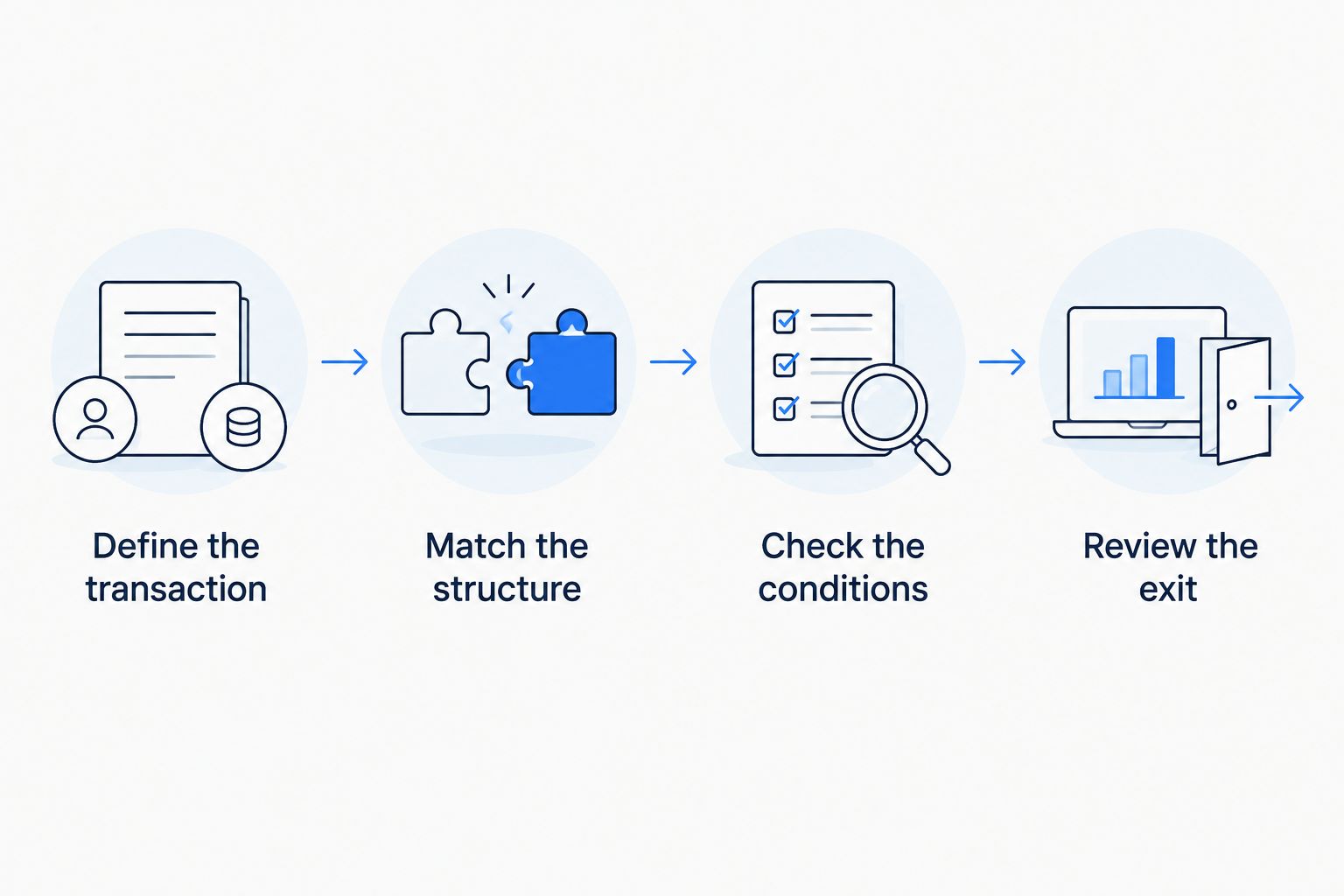
Build a single comparison worksheet for every lender. Keep the property, requested proceeds, borrowing entity, and intended closing date consistent so you can identify differences in the proposals rather than differences in the applications.
Define the transaction
State the property type, current operating condition, use of proceeds, and intended repayment source. Distinguish an acquisition from a refinance, and a transitional property from a stabilized asset.
Match the structure
Identify whether each proposal is bridge financing, DSCR lending, SBA financing, CMBS, or another structure. Do not assume two commercial loans carry equivalent repayment or prepayment obligations.
Check the conditions
Separate pre-approval from underwriting, document preparation, and funding. Ask which conditions remain open and which party controls each one; a preliminary decision is not a closing commitment.
Review the exit
Read maturity, extension, prepayment, and release provisions against your actual business plan. If the plan depends on refinancing, identify what must happen at the property before that refinance becomes feasible.
For a 2026 decision, record the date and status of each written proposal. Ask the lender to confirm changes in writing rather than carrying assumptions from an earlier conversation into your final selection.
When staying with Failla is the right call
Stay with Failla when its written offer meets your financing requirements and the alternatives do not improve the transaction on the dimensions that matter. Changing lenders solely because another provider lists more programs does not solve a borrowing problem.
Keep Failla in contention if you understand the remaining funding conditions, accept the borrower obligations, and can execute the repayment plan. Select the offer that fits—not the longest product list.
FAQ
What's the best Failla alternative in 2026?
Flex V Capital Ltd is a Failla alternative for commercial investors and business borrowers comparing several financing structures. Its stated offerings include bridge, DSCR, hard money, SBA, CMBS, and Fannie Mae financing; select a lender only after reviewing a transaction-specific proposal.
Is a direct commercial lender better than a bank?
A direct commercial lender is not automatically better than a bank. Compare the proposed loan, funding conditions, borrower obligations, and any banking relationship requirements against the same transaction.
Does a 48-hour pre-approval mean the loan closes in 48 hours?
No, a 48-hour pre-approval is not a promise to fund within 48 hours. Confirm the remaining underwriting, documentation, and closing conditions separately.
Can an SBA lender replace a commercial property lender?
An SBA lender is an alternative only when the business and transaction qualify for the applicable SBA program. Confirm eligibility and use-of-proceeds requirements before comparing the proposal with other commercial financing.
What should I compare between Failla and another lender?
Compare loan structure, proceeds, funding conditions, repayment obligations, guarantees, and exit provisions. Use the same property facts and borrowing assumptions for every proposal.
When should I stay with Failla instead of switching?
Stay with Failla when its written offer fits your transaction better than the alternatives. A broader program list elsewhere is not enough reason to change lenders.
One last thing
Ask each lender to identify the conditions that remain after pre-approval. That answer separates an encouraging preliminary response from an executable financing plan—and gives you a concrete basis for your next decision.


