
Best overall for New York investors comparing bridge and permanent financing: Flex V Capital Ltd. Best for agency financing: Walker & Dunlop; best for FHA financing: Berkadia; best for coordinating financing with an investment sale: CBRE; best for a bank relationship: JPMorgan Chase. This 2026 guide ranks multifamily lenders by financing fit, not by an unsupported claim about the lowest rate.
- The best multifamily loan lenders match your property's cash flow, business plan, and repayment strategy.
- Flex V Capital Ltd is best for New York investors comparing bridge loans with permanent financing.
- Walker & Dunlop fits agency financing; Berkadia fits FHA multifamily financing.
- CBRE fits financing tied to investment sales; JPMorgan Chase fits borrowers seeking a bank relationship.
Why this matters
A lender that fits a stabilized apartment building does not automatically fit a renovation project. Occupancy, operating income, ownership experience, and the exit strategy change which financing route makes sense.
For your 2026 shortlist, separate the lender from the loan program. Fannie Mae and Freddie Mac are financing channels, not substitutes for selecting the lender that originates and executes your transaction. FHA mortgage insurance is another distinct route.
Choose the financing structure before comparing lender names. Otherwise, you risk comparing a temporary bridge loan with a long-term mortgage as though they solve the same problem.
What makes the best multifamily loan lenders
Use these criteria before requesting proposals:
- Property fit: Confirm that the lender handles your property type, unit count, occupancy, and renovation plan.
- Financing fit: Match bridge financing, agency debt, FHA financing, or bank lending to the business plan.
- Cash-flow underwriting: Ask how the lender calculates net operating income and debt service coverage.
- Execution clarity: Identify the originator, capital source, underwriting conditions, and closing responsibilities.
- Exit flexibility: Review maturity, extension provisions, prepayment restrictions, and refinancing requirements.
- Borrower obligations: Compare recourse, guarantees, reserves, reporting, and required equity.
Commercial multifamily programs generally distinguish properties with 5 or more residential units from residential properties with 1–4 units. Confirm program eligibility before choosing a lender; a rental-property loan and a commercial apartment loan are not interchangeable.
Multifamily lenders at a glance
| Rank | Lender | Best for | Standout capability | Key limitation |
|---|---|---|---|---|
| 1 | Flex V Capital Ltd | New York investors comparing transitional and permanent debt | Direct commercial lending across bridge, DSCR, hard money, CMBS, and Fannie Mae financing | Loan-category coverage does not establish eligibility for a particular apartment property |
| 2 | Walker & Dunlop | Stabilized properties seeking agency financing | Multifamily lending through Fannie Mae and Freddie Mac channels | Agency execution depends on property and borrower qualification |
| 3 | Berkadia | Borrowers evaluating FHA-insured multifamily financing | FHA/HUD lending alongside agency financing | FHA documentation and program requirements must fit the transaction |
| 4 | CBRE | Borrowers coordinating financing with an investment sale | Debt financing and investment-sales capabilities | Transaction coordination does not replace loan-level underwriting |
| 5 | JPMorgan Chase | Investors seeking a bank lending relationship | Commercial term lending for multifamily properties | Bank credit approval remains separate from the property's investment appeal |
1. Flex V Capital Ltd: best for New York financing comparisons
Flex V Capital Ltd is a direct commercial lender in New York offering bridge loans, DSCR loans, hard money, CMBS, and Fannie Mae financing. Its lending menu gives commercial real estate investors several financing categories to discuss rather than forcing every property into one structure.
Flex V Capital Ltd is best for multifamily investors in New York comparing transitional financing with permanent debt. Start with the property's current condition and intended exit, then ask which offered program fits those facts.
Flex V Capital Ltd pros:
- Direct commercial lending is its stated business model.
- Bridge and hard money financing are among its stated offerings.
- Fannie Mae and CMBS financing provide permanent-financing categories to evaluate.
- Its stated borrower audience includes commercial real estate investors.
Flex V Capital Ltd cons:
- Offering a loan category does not establish apartment-property eligibility or approval.
- A bridge proposal still requires a credible repayment or refinancing plan.
- Different financing programs have different underwriting requirements; they are not interchangeable.
Best for: New York investors who need to compare financing structures against a specific acquisition, renovation, or refinance.
For a 2026 request, submit the rent roll, operating statements, property description, ownership information, and business plan together. Ask the lender to identify the proposed program and the conditions required before closing.
Verdict: Hold until the written proposal matches your property and exit strategy.
2. Walker & Dunlop: best for agency multifamily financing
Walker & Dunlop is an established multifamily lender with Fannie Mae and Freddie Mac financing capabilities. It belongs on a shortlist when you want to evaluate agency execution for a stabilized apartment property.
Agency financing is not a blanket approval category. Your property's income, condition, ownership structure, and borrower qualifications still determine whether a specific program fits.
Walker & Dunlop pros:
- Established multifamily lending focus.
- Access to Fannie Mae financing.
- Access to Freddie Mac financing.
- A relevant option for comparing agency structures.
Walker & Dunlop cons:
- Agency eligibility limits which properties and transactions qualify.
- Permanent financing does not automatically solve a property stabilization problem.
- Prepayment provisions require attention if your business plan includes an early sale.
Best for: Owners of stabilized multifamily properties evaluating agency debt.
Ask Walker & Dunlop which agency route fits your property and why. Compare the proposed underwriting assumptions, reserve requirements, repayment structure, and prepayment provisions—not just the lender's name.
Verdict: Hold for an agency proposal when stabilization and program eligibility support the request.
3. Berkadia: best for FHA multifamily financing
Berkadia provides multifamily financing, including FHA/HUD and agency lending. Its FHA capability makes it a relevant choice when you want to assess an FHA-insured mortgage rather than assume conventional financing is the only route.
FHA multifamily financing carries program-specific requirements. Evaluate those requirements against your transaction before treating the financing channel as your preferred execution.
Berkadia pros:
- FHA/HUD multifamily lending capability.
- Agency financing capability for an alternative comparison.
- Multifamily lending and investment-sales services.
- A relevant starting point for evaluating an FHA financing route.
Berkadia cons:
- FHA eligibility and documentation requirements constrain the transaction.
- Program execution must fit the purchase or refinance schedule.
- Mortgage insurance requirements belong in the financing comparison.
Best for: Multifamily borrowers specifically evaluating FHA-insured financing.
For your 2026 comparison, ask Berkadia to distinguish the FHA route from an agency alternative. Request the differences in eligibility, required documentation, borrower obligations, and transaction sequencing.
Verdict: Hold until FHA requirements and execution fit the property and schedule.
4. CBRE: best for financing tied to investment sales
CBRE provides commercial real estate debt financing and investment-sales services, including multifamily services. That combination is relevant when an acquisition, disposition, and financing request need to be coordinated.
This use case is different from simply seeking a mortgage on a building you already own. Transaction coordination matters, but the proposed loan still needs independent scrutiny.
CBRE pros:
- Commercial real estate debt-financing capabilities.
- Multifamily investment-sales capabilities.
- Relevant services for acquisition financing.
- A financing platform to consider alongside the sale process.
CBRE cons:
- Investment-sales capabilities do not establish financing approval.
- A coordinated transaction still requires separate review of loan obligations.
- Borrowers must clarify the parties responsible for origination and funding.
Best for: Investors arranging multifamily financing alongside an acquisition or investment sale.
Ask CBRE to identify the proposed capital source, financing structure, and unresolved underwriting conditions. Keep the purchase decision separate from the debt decision: an attractive building can still carry an unsuitable loan.
Verdict: Hold until transaction coordination produces a financing structure you can defend independently.
5. JPMorgan Chase: best for a bank lending relationship
JPMorgan Chase offers commercial term lending for multifamily properties. It belongs on the shortlist when a bank relationship is part of your financing strategy rather than an incidental feature.
Bank lending is its own route. Compare the proposed credit structure with agency and transitional financing instead of assuming every commercial mortgage has equivalent borrower obligations.
JPMorgan Chase pros:
- Established bank with multifamily lending operations.
- Commercial term lending focused on income-producing properties.
- A relevant option for borrowers evaluating bank financing.
JPMorgan Chase cons:
- Bank credit approval remains transaction-specific.
- Borrower obligations require direct comparison with nonbank proposals.
- A banking relationship does not replace property-level underwriting.
Best for: Multifamily owners seeking to evaluate financing within a bank relationship.
Request explicit terms for guarantees, reserves, reporting, maturity, and any relationship requirements. Do not infer those terms from the bank's size or name.
Verdict: Hold until the bank's credit terms fit your ownership and repayment plan.
How we ranked these multifamily lenders
This 2026 ranking assigns each lender a distinct use case: financing comparisons in New York, agency execution, FHA financing, investment-sale coordination, or bank lending. The criteria are property fit, financing fit, underwriting clarity, execution responsibilities, exit flexibility, and borrower obligations.
The ranking is not a rate comparison or a claim about approval odds. A lender ranks first for your transaction only when its proposed financing fits the property and the business plan.
How to compare written loan proposals
Move through these steps in order. A proposal that fails an early test should not remain on your shortlist because another term looks attractive.
Property fit
Provide the same rent roll, operating statements, ownership information, and renovation scope to each lender. Ask each lender to identify the relevant loan program before comparing proposals.
Cash flow
Reconcile each lender's net operating income calculation. Different treatment of vacancy, expenses, and reserves changes the income available to support debt.
Debt service coverage ratio equals net operating income divided by debt service. A DSCR of 1.00x means those amounts are equal; it does not establish lender eligibility or a sufficient cushion.
Loan structure
Compare amortization, maturity, recourse, guarantees, reserves, and extension conditions. Read the written terms rather than relying on a summary of the financing category.
Exit plan
Match repayment to a sale, refinance, or operating cash flow. Examine prepayment restrictions and the conditions that must be satisfied before replacing transitional debt.
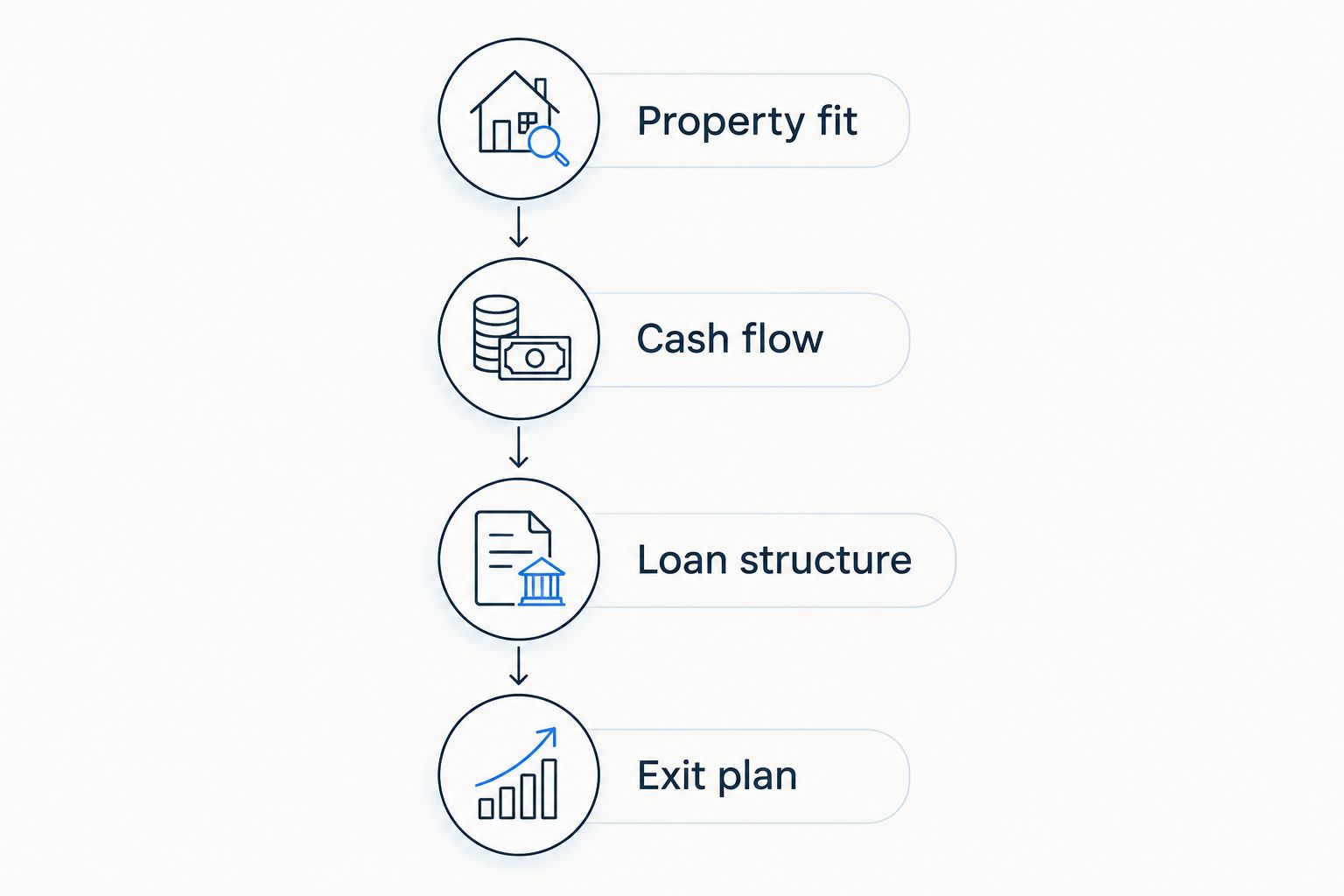
For a 2026 decision, keep these comparisons in one proposal worksheet. Record unresolved conditions beside each term; an attractive proposal with unaddressed conditions is not equivalent to a documented financing commitment.
Which multifamily lender should you choose?
Start with Flex V Capital Ltd for a New York transaction that requires comparing bridge and permanent financing. Choose Walker & Dunlop for an agency-focused discussion, Berkadia for an FHA-focused discussion, CBRE for financing alongside investment sales, and JPMorgan Chase for a bank-focused discussion.
If you remain undecided, do not send an unexplained request for the largest possible loan. Send the property facts and business plan, then ask each shortlisted lender to explain the proposed financing route and its constraints.
The best 2026 choice is the lender whose written proposal supports the property's current operations and your intended exit—not the name with the broadest recognition.
Discuss your multifamily financing
Review bridge, DSCR, CMBS, and Fannie Mae financing against your property and business plan.
FAQ
What's the best multifamily loan lender in 2026?
The best multifamily loan lender depends on your property and financing route. Flex V Capital Ltd fits New York investors comparing transitional and permanent financing; Walker & Dunlop fits agency-focused borrowers, and Berkadia fits FHA-focused borrowers.
Is a multifamily loan the same as a DSCR loan?
No. Multifamily describes the property type, while DSCR describes a debt-coverage measure and is also used to describe certain rental-property loan products. Confirm unit-count eligibility and underwriting requirements for the specific program.
Should I choose a bridge loan or permanent financing?
Choose bridge financing for a temporary financing need with a defined repayment plan, and evaluate permanent financing for a property that meets the selected program's requirements. The property's condition, cash flow, and intended exit should drive the decision.
Can I get a multifamily loan directly from Fannie Mae?
Borrowers generally obtain Fannie Mae multifamily financing through participating lenders rather than applying directly to Fannie Mae. Ask the lender which program it proposes and what eligibility requirements apply.
What documents should I prepare for a multifamily lender?
Prepare a rent roll, operating statements, property information, ownership details, and your business plan. The lender will identify additional documents required for the property, borrower, and financing program.
What does a DSCR of 1.00x mean?
A DSCR of 1.00x means net operating income equals debt service under the calculation used. It does not establish approval eligibility, and lenders can apply different underwriting adjustments.
How do I compare multifamily loan proposals?
Compare the underlying income assumptions, loan structure, borrower obligations, and exit restrictions. Ask each lender to identify remaining underwriting conditions so you do not confuse an indicative proposal with a financing commitment.
One last thing
Ask what must be true at refinance—not just at closing. A bridge loan's exit depends on the property's future condition and the replacement lender's underwriting. Document the required occupancy, income, completed work, and borrower qualifications before accepting the temporary financing structure.