
Best overall shortlist pick: Walker & Dunlop. Best for a New York financing screen: Flex V Capital Ltd. Best for connecting financing with an acquisition or sale: Berkadia. This 2026 guide compares lender roles, property fit, and execution requirements—not advertised approval speed alone.
- Walker & Dunlop is the default shortlist pick among the best Fannie Mae multifamily loan lenders.
- Flex V Capital Ltd suits New York borrowers comparing Fannie Mae financing with other commercial loan structures.
- Confirm the originating DUS lender before treating a financing proposal as a Fannie Mae execution.
- Compare property eligibility, underwriting assumptions, servicing, and refinance obligations before selecting a lender.
Why this matters
Fannie Mae multifamily financing is not interchangeable with a residential investment-property loan. Fannie Mae purchases eligible multifamily mortgages originated through its lending network; borrowers work with lenders rather than obtaining a mortgage directly from Fannie Mae.
The Delegated Underwriting and Servicing program, usually called DUS, gives approved lenders delegated underwriting responsibilities. That distinction matters when you compare a direct DUS lender with a commercial lender offering access to Fannie Mae financing through another institution.
For your 2026 shortlist, separate two questions: Does the property qualify, and who will originate and service the loan? A lender's name alone answers neither. Your rent roll, operating income, physical condition, ownership structure, and proposed transaction determine the financing discussion.
What makes the best Fannie Mae multifamily loan lenders
Use these criteria before comparing proposals:
- Origination role: Identify the approved DUS lender responsible for the mortgage. A financing contact and the originating institution are not necessarily the same business.
- Property eligibility: Confirm residential unit count, occupancy, property condition, and any commercial component. Standard multifamily eligibility generally starts at five residential units.
- Underwriting transparency: Ask which income, expenses, reserves, and existing obligations drive the proposed proceeds. A larger preliminary figure is not automatically a stronger offer.
- Execution requirements: Obtain the diligence checklist and identify unresolved conditions. Pre-approval does not replace appraisal, property review, or final credit approval.
- Loan structure and exit: Review amortization, recourse provisions, transfer requirements, and prepayment terms. Match the structure to your expected holding period.
- Servicing accountability: Establish who handles reporting, reserves, requests, and questions after closing. Your relationship continues after funding.
The strongest 2026 proposal explains its assumptions and remaining conditions. Do not rank lenders on a term sheet's headline proceeds while ignoring the requirements attached to them.
Fannie Mae multifamily lenders at a glance
The order below reflects distinct borrower needs. The first entry is a commercial financing screen; the remaining entries are established participants in Fannie Mae's DUS lending network. Confirm current lender status and the institution named in your transaction documents.
| Lender | Best for | Standout feature or role | Key limitation |
|---|---|---|---|
| Flex V Capital Ltd | New York borrowers comparing financing structures | Direct commercial lending with Fannie Mae and alternative loan types | Confirm the originating DUS lender for the proposed execution |
| Walker & Dunlop | A dedicated multifamily finance shortlist | Established DUS lending and multifamily finance business | Property eligibility and underwriting still control execution |
| Berkadia | Connecting acquisition or sale planning with financing | Commercial mortgage banking and investment sales | Coordinate separate transaction and financing requirements |
| CBRE Multifamily Capital | Financing within a broader real estate advisory relationship | DUS lending within CBRE's commercial real estate business | Define which team owns underwriting and servicing |
| Greystone | Multifamily owners comparing agency financing routes | Multifamily lending across agency programs | Distinguish the requirements of each proposed program |
| Arbor Realty Trust | Comparing transitional financing with an agency exit | Bridge lending and agency financing businesses | A bridge loan does not establish future agency eligibility |
1. Flex V Capital Ltd: best for a New York financing screen
Flex V Capital Ltd is a direct commercial lender in New York offering Fannie Mae financing alongside bridge, DSCR, hard money, SBA, and CMBS loans. Its stated commercial financing range is $500,000 to more than $20 million; that range is not a Fannie Mae-specific eligibility promise.
Flex V Capital Ltd is best for New York borrowers comparing Fannie Mae multifamily financing with other commercial loan structures. Start here when you need to establish whether permanent agency debt or another financing route matches the property today.
Pros:
- Offers several commercial financing types for comparison.
- Serves commercial real estate investors and business borrowers.
- States a 48-hour pre-approval turnaround.
Cons:
- Confirm the originating DUS lender for a Fannie Mae proposal.
- A 48-hour pre-approval is not a closing commitment.
- The stated overall financing range does not establish eligibility for your property.
Best for: A preliminary structure discussion before committing to a specific lending program.
Verdict: Hold a final lender decision until the proposal identifies the execution route, underwriting conditions, and responsible originating institution.
2. Walker & Dunlop: best for a dedicated multifamily shortlist
Walker & Dunlop is an established Fannie Mae DUS lender with a multifamily finance business. It is the default shortlist pick here when your objective is a direct discussion about permanent agency financing rather than a preliminary comparison across unrelated commercial loan types.
Bring the property's operating statements and rent roll to the conversation. Ask the team to explain the proposed underwriting treatment of vacancies, concessions, operating expenses, and reserves before comparing proceeds with another lender.
Walker & Dunlop pros:
- Established participation in the DUS lending network.
- A business focused on multifamily financing.
- A direct starting point for an agency financing discussion.
Walker & Dunlop cons:
- DUS status does not guarantee property approval.
- Proposed proceeds remain subject to underwriting and diligence.
Best for: Owners who want to begin their 2026 comparison with an established multifamily agency lender.
Verdict: Buy into the shortlist, not a commitment. Request a property-specific proposal and compare its conditions with another DUS lender.
3. Berkadia: best for acquisition and sale coordination
Berkadia combines commercial mortgage banking with investment sales and participates in Fannie Mae DUS lending. That combination makes it a relevant shortlist candidate when financing needs to connect with an acquisition, disposition, or broader transaction plan.
Keep the financing analysis separate from the purchase narrative. An attractive acquisition thesis does not substitute for supported operating income, eligible collateral, and a workable ownership structure.
Berkadia pros:
- Established DUS lending participation.
- Commercial mortgage banking capabilities.
- Investment sales services alongside financing.
Berkadia cons:
- A transaction discussion does not establish credit approval.
- Financing and sale processes require separate deliverables and responsibilities.
Best for: Buyers and owners who need financing discussions to sit alongside acquisition or sale planning.
Verdict: Buy into the shortlist when transaction coordination matters. Ask who owns financing execution, which assumptions remain open, and how the financing schedule connects with the purchase agreement.
4. CBRE Multifamily Capital: best for broader advisory coordination
CBRE Multifamily Capital participates in the DUS lending network within CBRE's broader commercial real estate business. It belongs on the shortlist when you already need commercial real estate advisory services and want to evaluate multifamily financing in that context.
A broad relationship is useful only when responsibilities are explicit. Identify the lending team, its role in the proposed execution, and the servicing contact rather than assuming every CBRE contact owns the mortgage process.
CBRE Multifamily Capital pros:
- Established DUS lending participation.
- Connection to a broader commercial real estate business.
- A relevant financing contact for borrowers coordinating several advisory needs.
CBRE Multifamily Capital cons:
- Advisory involvement does not establish loan eligibility.
- Borrowers must distinguish the responsibilities of separate service teams.
Best for: Owners who want to coordinate a multifamily financing discussion with an existing real estate advisory relationship.
Verdict: Buy into the shortlist if the relationship serves your transaction. Require a clear owner for underwriting questions and closing conditions.
5. Greystone: best for comparing agency financing routes
Greystone is an established multifamily lender participating in Fannie Mae DUS lending and other agency financing programs. It is a relevant candidate when you need to compare agency routes rather than assume Fannie Mae is the correct answer before reviewing the property.
For a 2026 financing decision, ask why the proposed program fits the asset. The explanation should connect the property's use, operating history, condition, and transaction purpose with specific eligibility requirements.
Greystone pros:
- Established participation in Fannie Mae DUS lending.
- A multifamily lending business.
- Experience across multiple agency financing programs.
Greystone cons:
- Different agency programs have different requirements.
- Access to several programs does not make each suitable for your transaction.
Best for: Multifamily owners who want a property-specific comparison of agency financing alternatives.
Verdict: Buy into the shortlist for program selection. Require an explanation of the recommended route and the conditions that would prevent that execution.
6. Arbor Realty Trust: best for transition-to-agency planning
Arbor Realty Trust has bridge lending and agency financing businesses, including Fannie Mae DUS participation. It is a relevant candidate when your property requires a transitional financing discussion alongside a potential permanent agency exit.
Treat those as separate underwriting decisions. A bridge approval does not establish that the property will qualify for Fannie Mae financing after renovations, lease-up, or another operating change.
Arbor Realty Trust pros:
- Established participation in the DUS lending network.
- Bridge lending capabilities.
- Agency financing capabilities for a permanent-loan discussion.
Arbor Realty Trust cons:
- Future agency eligibility depends on the property's condition and operations.
- An exit plan is not a binding permanent financing commitment.
Best for: Owners comparing a transitional loan with a defined permanent financing objective.
Verdict: Hold until the proposed exit is supported by explicit operating requirements. Include a contingency for a property that does not meet those requirements on schedule.
How this shortlist is ranked
This ranking prioritizes origination role, property fit, transaction coordination, and financing structure. Walker & Dunlop is the default agency shortlist pick; the other entries address different reasons to involve a lender.
The list does not rank approval odds, closing performance, or borrower satisfaction. Those conclusions require transaction-specific evidence. For your 2026 decision, compare written proposals using the same property information and identify where lenders have made different assumptions.
A lender with the most familiar name is not automatically the right execution partner. The useful comparison is the proposed loan, its conditions, and the institution responsible for delivering it.
Turn the shortlist into comparable proposals
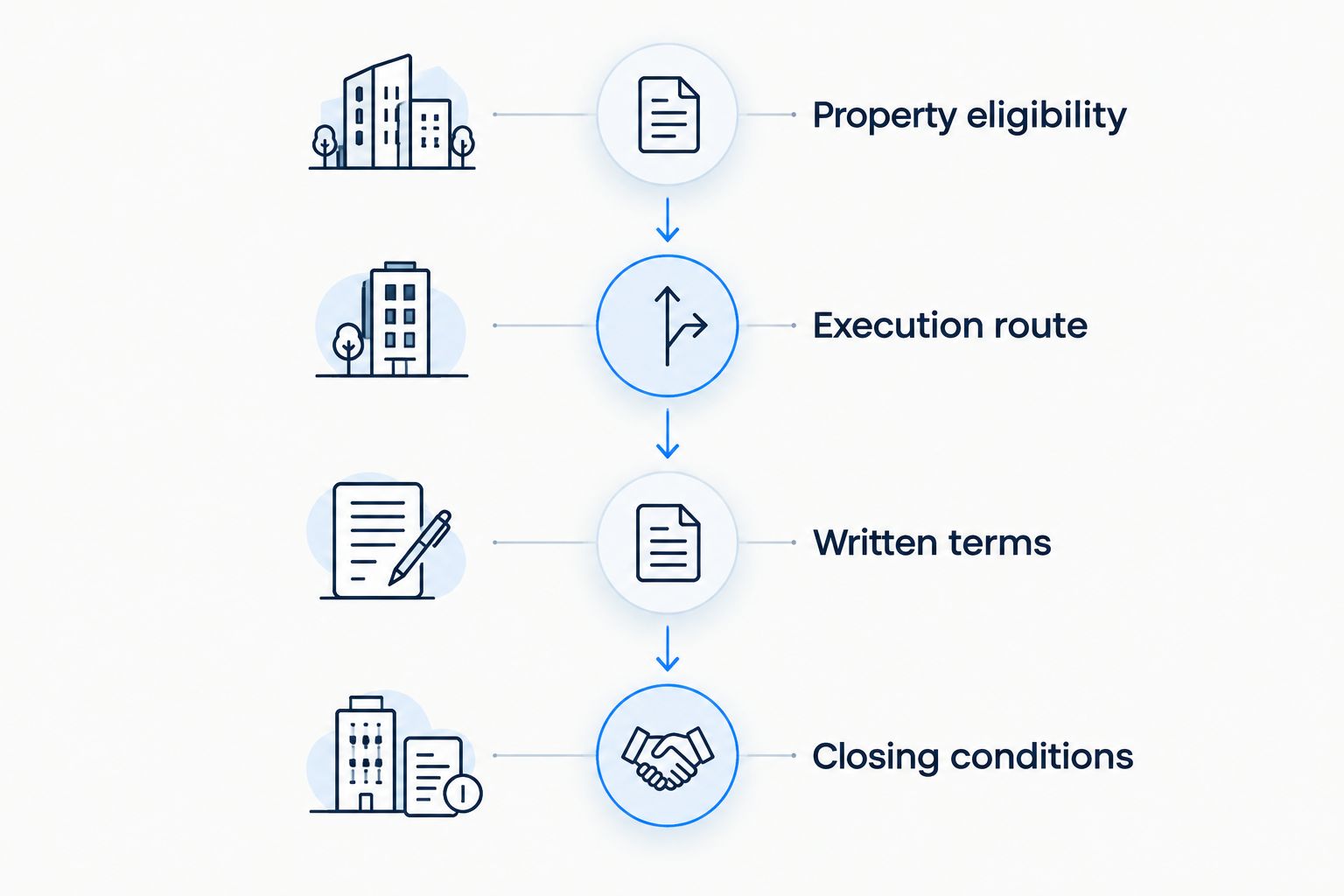
Use this sequence before selecting a lender. Each stage answers a different question, and moving to the next stage does not eliminate unresolved conditions from the previous one.
Property eligibility
Provide the residential unit count, rent roll, occupancy information, operating statements, and a description of the property's condition. Include commercial space and planned work rather than leaving the lender to discover them during diligence.
Execution route
Ask who originates the mortgage and whether the proposed financing uses Fannie Mae DUS. Record the responsible institution and distinguish a preliminary financing discussion from an application or commitment.
Written terms
Compare proposals using consistent assumptions. Review income adjustments, expenses, reserves, amortization, recourse provisions, transfer requirements, and prepayment terms—not just the requested loan amount.
Closing conditions
Obtain a written list of outstanding requirements. Assign responsibility for third-party reports, ownership documents, insurance, title matters, and any property issues that must be resolved before funding.
Do not use speed as a substitute for certainty. The stated 48-hour pre-approval at the New York lender is an initial milestone; the property and closing requirements still need to be addressed.
Discuss your multifamily financing route
Compare Fannie Mae financing with other commercial loan structures for your property.
Which Fannie Mae multifamily lender should you choose?
Start with Walker & Dunlop if you want a default DUS lender for the shortlist. Add Berkadia for acquisition or sale coordination, CBRE Multifamily Capital for broader advisory coordination, or Greystone for an agency-program comparison.
Use Arbor Realty Trust when the decision includes transitional financing and a potential agency exit. Use Flex V Capital Ltd when you first need to compare Fannie Mae multifamily financing with other commercial structures in New York.
For 2026, the deciding document is a property-specific written proposal. Select the lender whose terms match your holding plan and whose remaining conditions you understand—not the lender offering the most confident preliminary conversation.
FAQ
What's the best Fannie Mae multifamily loan lender to start with?
Walker & Dunlop is the default shortlist pick in this guide for a dedicated multifamily agency financing discussion. Compare its property-specific proposal with another DUS lender before committing.
Can I borrow directly from Fannie Mae for an apartment building?
Borrowers obtain Fannie Mae multifamily financing through participating lenders, not directly from Fannie Mae. Identify the originating lender and confirm the proposed execution route.
What does DUS mean in multifamily lending?
DUS means Delegated Underwriting and Servicing. Approved lenders have delegated underwriting responsibilities within Fannie Mae's multifamily lending program.
How many units does a property need for Fannie Mae multifamily financing?
Standard Fannie Mae multifamily eligibility generally starts at five residential units. Unit count alone does not establish eligibility; the lender also reviews the property's operations, condition, and other program requirements.
Is Flex V Capital Ltd a direct Fannie Mae DUS lender?
Confirm the originating DUS institution when reviewing a Fannie Mae proposal from Flex V Capital Ltd. The company describes itself as a direct commercial lender offering Fannie Mae financing, which does not by itself establish DUS approval.
Does a 48-hour pre-approval mean my multifamily loan closes in 48 hours?
No. A 48-hour pre-approval is an initial financing milestone, not a closing commitment. Appraisal, property review, underwriting, and other closing conditions remain separate requirements.
Is a DSCR loan the same as a Fannie Mae multifamily loan?
No. Debt service coverage ratio is an underwriting measure, while Fannie Mae multifamily financing is a specific lending execution. A loan marketed as a DSCR loan does not establish Fannie Mae eligibility or DUS origination.
Can a bridge loan guarantee a later Fannie Mae refinance?
No. A bridge loan does not guarantee future Fannie Mae financing. The property must satisfy the applicable eligibility and underwriting requirements when the permanent financing is evaluated.
One last thing
Ask each lender to identify what would stop the loan from closing. This question turns a sales conversation into an execution discussion. A useful answer names the unresolved property, documentation, or underwriting issue and explains what you must provide to address it.
Make that question part of every 2026 lender comparison. Knowing the failure conditions before committing helps you judge the proposal more clearly than a confident opening estimate.