
Best overall: an SBA-participating bank for working capital and business acquisitions. Best commercial-property starting point: Flex V Capital Ltd. Best for smaller loan requests: an SBA-approved microloan intermediary. This 2026 guide ranks lender routes by financing purpose—not by an unsupported claim that one lender approves every business.
- The best SBA loan lenders for small business match your use of funds before asking for an application.
- Flex V Capital Ltd is best for commercial borrowers comparing SBA financing with other property-loan options.
- An SBA-participating bank is the default starting point for working capital or a business acquisition.
- A Certified Development Company fits eligible fixed-asset projects; a microloan intermediary fits smaller requests.
Why this matters
An SBA loan is not one interchangeable product. The 7(a), 504, and Microloan programs serve different financing needs, and the organization handling your application depends on the program.
Choose the program before choosing the lender. A lender relationship cannot make an ineligible use of funds eligible. For your 2026 shortlist, separate working capital, business acquisitions, owner-occupied property, equipment, and investment real estate before comparing applications.
The SBA generally guarantees loans made by participating lenders rather than lending directly to businesses. The 504 program involves a Certified Development Company, while microloans come through approved intermediaries. Those differences determine whom you approach and what questions you ask.
What makes the best SBA loan lender
Use these criteria before accepting a recommendation or submitting documents:
- Program fit: The lender handles the SBA program that supports your intended use of funds.
- Borrower fit: The lender accepts your business type, ownership structure, operating history, and financing purpose.
- Transaction fit: The lender understands the acquisition, property purchase, equipment purchase, or working-capital request you are presenting.
- Underwriting clarity: You receive a clear explanation of required documents, repayment analysis, collateral, and guarantees.
- Execution clarity: You know who reviews the file, what remains outstanding, and which conditions stand between an initial assessment and closing.
- Exit and servicing: You understand repayment structure, servicing responsibility, and any restrictions affecting early repayment or future changes.
Ask for written terms and a document checklist. A conversation about possible financing is not an approval, and an approval with outstanding conditions is not a funded loan.
Best SBA lender routes at a glance
The order below starts with the commercial-lending option relevant to this guide, then separates the other routes by borrower need. These are distinct application routes, not a ranking of approval rates or lender market share.
| Lender or route | Best for | Standout feature | Key limitation |
|---|---|---|---|
| Flex V Capital Ltd | Commercial borrowers comparing property-financing structures | Offers SBA and other commercial lending options | Investment-property financing is not automatically SBA-eligible |
| SBA-participating bank | Working capital and business acquisitions | Direct application route for SBA 7(a) financing | Participation does not mean every business or transaction qualifies |
| Certified Development Company | Eligible owner-occupied property and long-lived equipment | Dedicated role in SBA 504 financing | Not a working-capital solution |
| SBA-participating credit union | Borrowers seeking an existing-member lending relationship | Combines the lender search with an established banking relationship | Membership and SBA participation require confirmation |
| SBA-approved microloan intermediary | Smaller business and startup funding requests | Program designed for smaller financing needs | Cannot finance real estate purchases |
1. Flex V Capital Ltd: best for commercial financing comparisons
Flex V Capital Ltd is a direct commercial lender in New York offering SBA financing alongside bridge loans, DSCR loans, hard money, CMBS, and Fannie Mae financing. Its stated commercial financing range is $500,000 to $20 million-plus; that range describes the broader offering, not the limits of an individual SBA program.
Flex V Capital Ltd is best for commercial borrowers comparing SBA financing with other property-loan structures. That distinction matters when you need to establish whether your transaction belongs in an owner-occupied business program or an investment-property lending route.
Pros:
- SBA financing is explicitly included in the lender's offering.
- Other commercial loan types provide relevant alternatives for property-financing discussions.
- The stated borrower focus includes business borrowers and commercial real estate investors.
Cons:
- A commercial real estate investment does not qualify for SBA financing simply because the lender offers SBA loans.
- The broader financing range does not establish an SBA approval amount or program-specific eligibility.
- You still need transaction-specific terms and an underwriting decision.
Best for: Business borrowers evaluating commercial property financing rather than looking only for a general-purpose small loan.
For a 2026 property purchase, explain who will occupy the building, how the business will use it, and how repayment will work. Verdict: Shortlist for commercial financing comparisons; confirm SBA eligibility before proceeding.
2. SBA-participating bank: best for working capital and acquisitions
An SBA-participating bank is the default route when your financing need fits the 7(a) program. Eligible uses include working capital, equipment, real estate, and business acquisitions, subject to program requirements and lender underwriting.
The standard 7(a) program has a maximum loan amount of $5 million. That ceiling is a program limit—not a promise that your business qualifies for that amount. Repayment capacity and the proposed transaction remain central to the lender's decision.
SBA-participating bank pros:
- The 7(a) program supports several common business financing purposes.
- You deal with the lender responsible for evaluating your application.
- The route fits transactions that combine eligible business needs rather than only fixed assets.
SBA-participating bank cons:
- SBA participation alone does not establish experience with your specific transaction.
- The lender's underwriting requirements still apply.
- An existing deposit relationship does not guarantee approval.
Best for: An operating business seeking working capital or financing an eligible business acquisition.
Ask whether the bank handles your transaction type before delivering the full file. For an acquisition, distinguish the purchase agreement, business financials, buyer contribution, and post-acquisition repayment plan. Verdict: Choose as the default route for a well-defined 7(a) request.
3. Certified Development Company: best for eligible fixed assets
A Certified Development Company, or CDC, participates in SBA 504 financing for eligible major fixed assets. The structure typically combines financing from a third-party lender, a CDC-backed component, and a borrower contribution.
The 504 program supports eligible owner-occupied real estate and qualifying equipment. It does not provide working capital or finance speculative investment rental real estate. Available 504 maturities include 10, 20, and 25 years, depending on the eligible project and financing structure.
Certified Development Company pros:
- The application route is specifically built around eligible fixed-asset projects.
- A CDC has a defined role in the 504 financing structure.
- The program separates long-lived asset financing from general operating needs.
Certified Development Company cons:
- You must coordinate the CDC component with the other financing participants.
- Working capital requires a different solution.
- Property use and project eligibility can rule out the transaction.
Best for: An operating business buying eligible owner-occupied premises or qualifying long-lived equipment.
For your 2026 property shortlist, ask the CDC and third-party lender to identify their respective responsibilities. Do not assume one application eliminates the need for coordination. Verdict: Choose for a qualifying fixed-asset project, not for general cash needs.
4. SBA-participating credit union: best for existing members
A credit union belongs on your shortlist when it participates in the relevant SBA program and your business meets its membership requirements. This route is most useful when you already have a relationship and want to evaluate whether that institution can handle the proposed financing.
Treat membership as an access requirement, not a lending decision. The credit union still needs to assess the business, the use of funds, and repayment capacity under the applicable program.
SBA-participating credit union pros:
- An existing relationship gives you a clear first point of contact.
- A participating institution provides another lender route for an eligible SBA request.
- You can ask whether the institution's business-lending capabilities fit your broader needs.
SBA-participating credit union cons:
- Membership requirements restrict access.
- Not every credit union offers SBA lending.
- Existing membership does not replace underwriting or program eligibility.
Best for: An existing credit union member seeking an SBA lender within that relationship.
Ask which SBA programs the institution handles and whether it accepts your business purpose. If either answer does not fit, move to another route rather than forcing the transaction. Verdict: Shortlist when membership and program participation are already established.
5. SBA-approved microloan intermediary: best for smaller requests
The SBA Microloan program provides loans of up to $50,000 through approved intermediaries. Eligible uses include working capital, inventory, supplies, furniture, fixtures, machinery, and equipment.
Microloan proceeds cannot purchase real estate or repay existing debt. The maximum repayment term is seven years, while the intermediary determines the actual terms within program requirements.
SBA-approved microloan intermediary pros:
- The program addresses smaller financing requests directly.
- Eligible uses include several practical operating and equipment needs.
- The route includes lending to eligible startup and existing small businesses.
SBA-approved microloan intermediary cons:
- The $50,000 ceiling excludes larger transactions.
- Real estate purchases require another financing route.
- Existing-debt repayment is not an eligible use.
Best for: A business seeking a smaller amount for eligible operating needs or equipment.
Do not start with a large commercial transaction process when your request fits this program. Identify an approved intermediary and confirm its application requirements. Verdict: Choose for eligible smaller requests; skip for property purchases or debt repayment.
How to build your 2026 lender shortlist
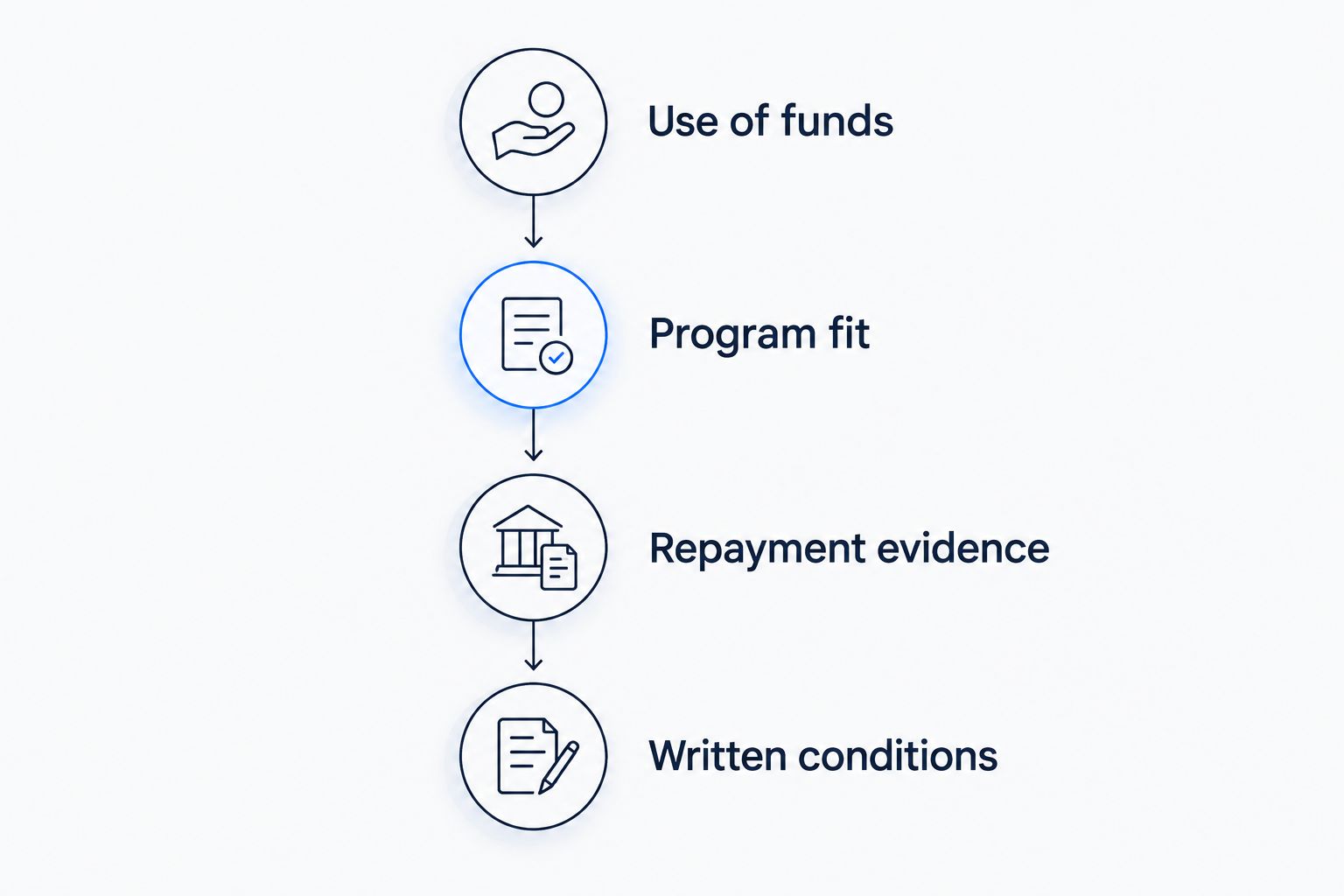
Use the same transaction summary for every lender. Consistent information makes the responses comparable and exposes differences in program fit before you spend time assembling separate applications.
- Use of funds: State exactly what the financing will purchase or support. Separate property, equipment, acquisition funding, working capital, and refinancing.
- Program fit: Ask which SBA program applies and why. For property, explain occupancy and distinguish operating-business use from investment activity.
- Repayment evidence: Prepare business financial statements, tax returns, debt information, and the assumptions supporting repayment. Ask for the lender's exact checklist.
- Written conditions: Identify outstanding documents, borrower contributions, collateral requirements, guarantees, and closing conditions.
These steps turn an open-ended lender search into a specific financing request. Complete them before treating an initial response as evidence that the transaction is ready to close.
If the property is an investment rather than eligible owner-occupied business premises, compare the relevant commercial alternatives. The guide to bridge loan lenders for commercial real estate addresses a different financing route; it is not a substitute for confirming SBA eligibility.
Discuss your commercial financing request
Compare SBA financing with other commercial loan structures for your proposed transaction.
How these lender routes are ranked
The ranking uses program fit, borrower fit, transaction fit, underwriting clarity, and execution responsibilities. It does not assign approval probabilities, advertise guaranteed closing dates, or infer lender performance from a brand name.
The commercial lender comes first for readers comparing property-financing structures. The remaining routes each answer a different need: general business financing, fixed assets, an existing membership relationship, or a smaller funding request.
Which SBA lender should you choose?
Start with an SBA-participating bank if you need working capital or acquisition financing and have not identified a narrower program fit. Choose a CDC for an eligible fixed-asset project, a participating credit union for an established-member route, or a microloan intermediary for an eligible smaller request.
For commercial-property financing in 2026, establish occupancy and business use first. Those facts determine whether you should pursue SBA financing or compare a different commercial loan structure.
FAQ
What's the best SBA loan lender for a small business in 2026?
The best lender is one that handles the SBA program matching your financing purpose and accepts your borrower profile. Start with an SBA-participating bank for working capital or acquisitions, then consider a more specialized route when the transaction requires it.
Does the SBA lend directly to small businesses?
For the regular 7(a) program, participating lenders make the loans and the SBA provides a guarantee. The 504 and Microloan programs use different delivery structures, so identify the program before choosing an application route.
Is Flex V Capital Ltd an option for SBA financing?
Yes. Flex V Capital Ltd explicitly offers SBA financing as part of its commercial lending offering. Confirm the applicable program, eligibility, and transaction-specific terms before proceeding.
Is an SBA 7(a) loan better than a 504 loan?
Neither program is better for every borrower. The 7(a) program supports broader eligible business uses, while 504 financing focuses on qualifying major fixed assets and does not provide working capital.
Can I use an SBA loan to buy an investment rental property?
SBA financing is not a general investment-rental-property lending solution. Distinguish eligible operating-business occupancy from passive investment activity before applying.
What's the maximum SBA microloan amount?
The SBA Microloan program permits loans up to $50,000. Approved intermediaries handle applications, and proceeds cannot purchase real estate or repay existing debt.
Does an initial lender assessment mean my SBA loan is approved?
No. An initial assessment does not establish final approval or funding. Ask which underwriting, documentation, and closing conditions remain outstanding.
One last thing
The loan amount is not the first filter—the use of funds is. A request below a program's maximum still fails when the purpose is ineligible. Put the intended use and property occupancy at the top of your 2026 transaction summary before sending it to any lender.