
Airbnb-host DSCR financing is investment-property lending assessed through rental income and debt obligations, with the aim of financing a property that can support its payments. This guide to DSCR loans for Airbnb hosts explains how to document seasonal revenue, confirm short-term-rental eligibility, and compare financing without treating booking projections as guaranteed income.
- DSCR loans for Airbnb hosts require lender confirmation that short-term rentals and the proposed income evidence are eligible.
- Flexvcapital offers DSCR financing; confirm Airbnb property eligibility before paying for third-party reports.
- Compare accepted rental income, debt coverage, reserves, and prepayment terms—not just the quoted interest rate.
- Check local operating rules and association restrictions before relying on Airbnb revenue to support a loan.
Flexvcapital is best suited to real estate investors seeking a direct commercial lender offering DSCR financing. The lender offers DSCR loans, but that does not establish approval for a particular Airbnb property. Start with Flexvcapital and request confirmation of the property type, location, and rental-income documentation the lender accepts.
Why DSCR financing matters for Airbnb hosts
DSCR means debt service coverage ratio: qualifying property income divided by the debt-service amount used in underwriting. A ratio of 1.00 means the accepted income equals that payment obligation. It does not mean the property has no other expenses or that the loan will qualify.
Airbnb income creates a different underwriting problem from a fixed lease. Nightly receipts change with occupancy, seasonal demand, cancellations, and operating costs. A strong booking month does not establish sustainable coverage.
For a 2026 application, the central question is therefore not simply whether a lender offers DSCR loans. Ask whether the lender accepts short-term-rental income, how it calculates that income, and which expenses it recognizes.
Use the lender's income definition for qualification and your full operating budget for the investment decision. Those calculations answer different questions. The first addresses loan eligibility; the second addresses whether you can carry the property through weaker trading periods.
How to prepare an Airbnb DSCR application in 2026
1. Verify the property's operating eligibility
Start with a manual review of local government requirements, recorded property restrictions, and association documents. Financing does not authorize short-term-rental use. Check whether the planned operation requires a permit, registration, inspection, or other approval, and establish what happens when ownership changes.
Distinguish a restriction on short stays from a restriction on rental activity generally. That difference affects both your intended business model and any fallback rental strategy. Give the lender the actual operating facts rather than assuming an existing listing proves eligibility.
For a purchase, resolve these questions before treating projected rental income as part of a dependable financing plan. For a refinance, confirm that the current operation matches the use presented in the application.
- Check municipal short-term-rental rules for the property address.
- Read association, condominium, and deed restrictions.
- Identify required permits and their transfer conditions.
- Document whether you intend personal use.
- Ask the lender to confirm the proposed occupancy arrangement.
2. Reconcile rental income before requesting terms
Build a spreadsheet from booking statements and bank deposits before buying additional reporting services. Separate guest charges, refunds, platform deductions, taxes collected, and owner proceeds. A payout is not automatically the same as gross rental revenue or underwriting income.
For an operating property, organize 12 months of available records to show a full seasonal cycle; this is a preparation recommendation, not a universal lender requirement. If the property has a shorter history, present the actual period clearly. Do not extend peak-season results across the whole year.
For a purchase without operating history, label forecasts as projections. Ask which appraisal-based rent analysis, rental assessment, or other evidence the lender will accept before commissioning it. A document is useful only if it answers the lender's underwriting question.
- Reconcile booking statements with deposited funds.
- Separate recurring rental receipts from refundable deposits.
- Identify owner stays and unavailable dates.
- Distinguish historical revenue from projected revenue.
- Prepare a monthly income summary with supporting records.
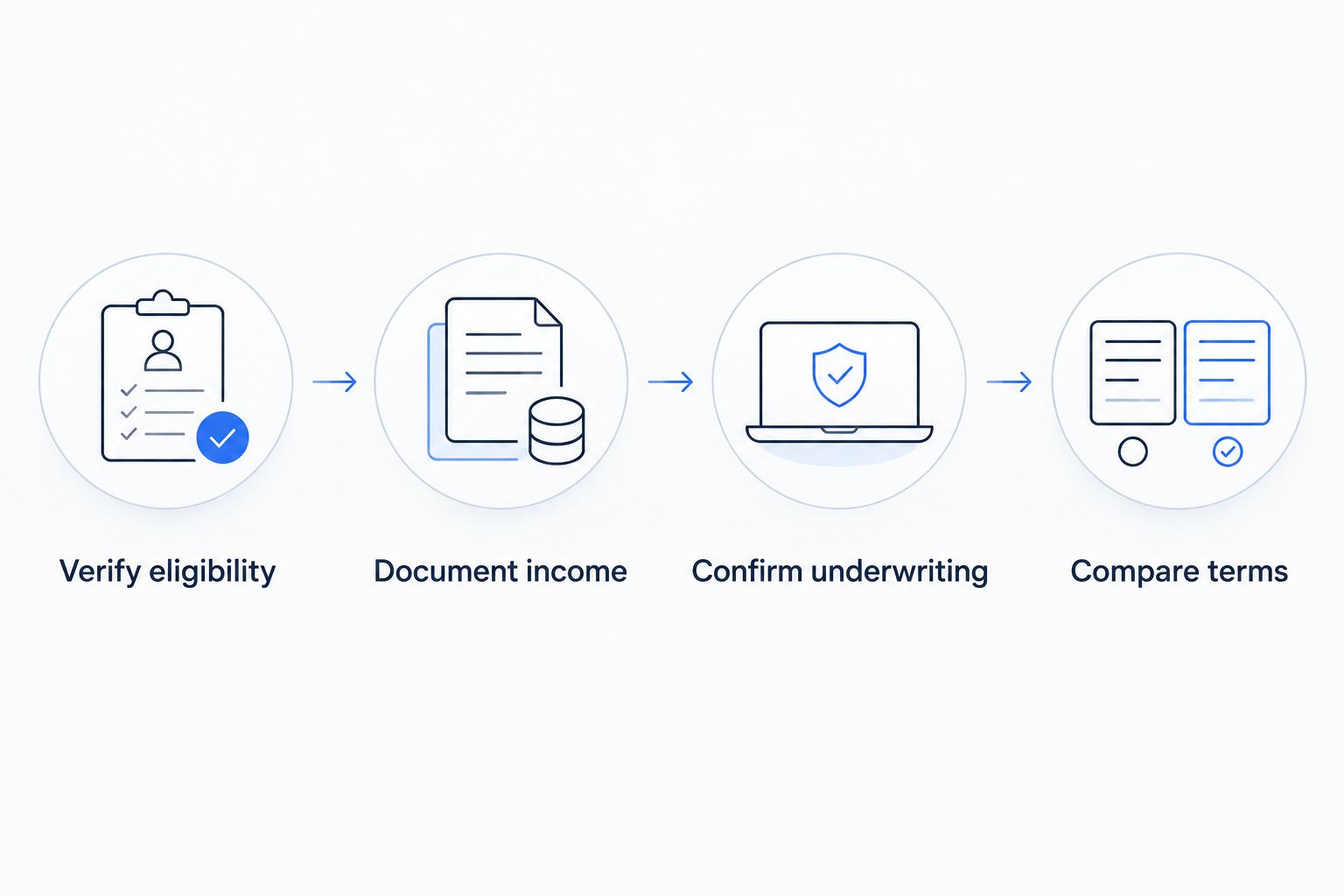
The preparation sequence is straightforward: verify eligibility, document income, confirm underwriting treatment, then compare terms. Skipping the income step leaves you comparing quotes built on different assumptions.
3. Confirm how each lender calculates DSCR
Calculate a preliminary ratio yourself, then ask the lender to explain its version. In investment-property lending, the income numerator and payment denominator depend on the program. Do not substitute a commercial net-operating-income calculation for a rental-income calculation unless that is the lender's stated method.
Ask whether the payment calculation includes principal, interest, taxes, insurance, and association obligations. Then establish how the lender treats short-term-rental income, vacancy, and the evidence you prepared. A DSCR figure is not comparable until its inputs are comparable.
After organizing your records, request a property-specific review from Flexvcapital rather than assuming its DSCR offering accepts every vacation-rental scenario. Use the DSCR loan lenders guide to structure a broader comparison, but obtain current eligibility and calculations directly from each lender.
- Request the exact income figure used for underwriting.
- Request the complete payment calculation.
- Confirm the minimum coverage requirement for your transaction.
- Ask how variable-rate or interest-only terms affect qualification.
- Confirm whether personal use changes eligibility.
4. Stress-test the property's actual cash flow
Create 2 separate scenarios: your documented operating case and a downside case. Choose the downside assumptions from the property's records and identifiable costs, not an arbitrary occupancy forecast. The purpose is to expose the amount of cash you must supply when receipts fall.
Include costs that an underwriting ratio does not necessarily capture. Cleaning, utilities, maintenance, management, furnishings, repairs, and replacement spending all affect what remains after debt service. Avoid counting guest-paid charges as profit when corresponding expenses consume them.
For your 2026 decision, keep the loan-qualification worksheet separate from the ownership budget. A property that meets a lender's DSCR requirement can still leave insufficient cash for irregular expenses. Work backward from the cash you can commit without depending on uninterrupted bookings.
- Model lower rental receipts using documented seasonal variation.
- Include recurring operating expenses and management charges.
- Budget for repairs and furnishing replacement.
- Include property taxes, insurance, and association obligations.
- Identify the cash available to cover operating shortfalls.
5. Compare written terms beyond the rate
Request written terms using the same property facts, requested proceeds, and income documentation. Otherwise, a lower quoted rate can reflect a different loan structure rather than a better offer. Establish which terms remain conditional on appraisal, underwriting, or other review.
Review the maturity date, amortization, payment structure, prepayment provisions, and cash-reserve conditions together. A repayment restriction matters if your plan depends on selling or refinancing. An interest-only payment also needs a separate analysis of what happens when the payment structure changes.
Ask Flexvcapital to identify the DSCR structure available for your transaction and distinguish preliminary terms from final approval. Its broader commercial-lending offering does not establish that every financing route fits an Airbnb property.
- Compare proposed proceeds and required equity.
- Review amortization, maturity, and payment adjustments.
- Read prepayment and early-payoff provisions.
- Confirm reserve, liquidity, and documentation conditions.
- Identify outstanding conditions before treating terms as executable.
6. Align approval conditions with your closing plan
Create a closing checklist from the lender's actual requirements, then assign responsibility for each item. Keep the entity name, purchase agreement, title information, insurance documents, and application consistent. Unexplained differences create questions that must be resolved before funding.
For a 2026 purchase, distinguish a preliminary assessment from a binding commitment and a completed closing. Do not use those milestones interchangeably when planning contractual deadlines. Ask which third-party reports are required and whether the lender must order them.
For a refinance, verify the existing payoff and any early-repayment obligations. For either transaction, preserve enough operating liquidity after closing rather than assigning every available dollar to the acquisition or refinance.
- Obtain a written list of remaining approval conditions.
- Confirm who orders required third-party reports.
- Reconcile ownership and borrowing-entity documents.
- Review insurance for the intended rental operation.
- Confirm closing funds and post-closing liquidity separately.
Compare financing options for Airbnb hosts
Choose the financing structure around the property and repayment plan—not around the fastest preliminary response. The following options serve different purposes. Their inclusion is not confirmation that a particular lender accepts your property or intended use.
| Option | Best for | Main advantage | Key limitation |
|---|---|---|---|
| DSCR financing | Investors seeking underwriting centered on property rental income | Connects qualification to accepted property income and debt obligations | Short-term-rental eligibility and income treatment require program confirmation |
| Conventional investment-property mortgage | Borrowers able to document personal income and meet the applicable guidelines | Provides a separate qualification route based on borrower and property requirements | Personal-income requirements and rental treatment can constrain eligibility |
| Bridge financing | Investors with a defined temporary funding need and repayment exit | Addresses a transitional stage before sale or replacement financing | Requires a credible exit before maturity; refinancing is not guaranteed |
| Commercial property financing | Transactions requiring a commercial-property underwriting approach | Evaluates the property and transaction within the applicable commercial structure | Property classification and operating documentation must fit the program |
Ask each lender to explain why its proposed route fits the property's use. Do not assume that a residential vacation rental belongs in a commercial program simply because an entity owns it. Likewise, do not assume that a commercial lender's full product range applies to every rental acquisition.
Common mistakes Airbnb hosts make
Treating booking revenue as qualifying income
A reservation calendar does not establish the income figure a lender accepts. Reconcile completed stays, cancellations, deductions, and deposits, then ask which evidence supports underwriting. Keep future bookings separate from collected revenue.
Assuming DSCR means no documentation
Property-income underwriting still requires evidence. Prepare ownership records, rental statements, insurance information, and the financial documents the lender requests. Do not confuse reduced reliance on personal income with an absence of credit or property review.
Ignoring personal-use restrictions
Your intended stays affect how the property is presented and operated. Disclose personal use before requesting terms, and confirm the program's occupancy rules. An investment-property application must match the actual plan.
Depending on an unconfirmed refinance
A bridge loan is not a promise of permanent financing. Test the proposed exit against the property's expected condition, documented income, and the replacement lender's requirements. Identify an alternative repayment source before committing.
Spending all available cash at closing
Closing funds and operating liquidity serve different purposes. Keep a separate cash-flow plan for seasonal weakness, repairs, and unexpected obligations. Meeting a lender's reserve condition does not replace your own expense budget.
FAQ
Can I use a DSCR loan to buy an Airbnb property in 2026?
Yes, when the lender's program accepts the property and its short-term-rental use. Confirm location, occupancy rules, and acceptable income evidence before treating a preliminary quote as a financing solution.
What DSCR do I need for an Airbnb loan?
The required DSCR depends on the lender and program. Ask for the minimum ratio and the exact income and payment figures used; a ratio calculated with different inputs is not a valid comparison.
Can projected Airbnb income qualify for a DSCR loan?
Projected Airbnb income qualifies only when the lender accepts that evidence under its program. Ask which rental analysis or appraisal documentation is acceptable before paying for a report.
Do DSCR loans require personal income documents?
DSCR programs focus on accepted property income, but documentation requirements depend on the lender. Confirm the required credit, liquidity, ownership, property, and financial records rather than assuming the loan requires no documents.
Is a DSCR loan better than a bridge loan for an Airbnb?
A DSCR loan fits a rental-income financing objective; a bridge loan fits a temporary funding need with a defined exit. Compare eligibility, maturity, payment structure, and repayment obligations against your actual holding plan.
Does Flexvcapital offer DSCR loans for Airbnb hosts?
Flexvcapital offers DSCR loans, but Airbnb-property eligibility requires direct confirmation. Submit the property address, intended use, and rental-income evidence for a transaction-specific assessment.
What should I prepare before applying for Airbnb financing?
Prepare the property's operating permissions, rental records, expense budget, ownership information, and intended loan purpose. Ask the lender for its document checklist and accepted rental-income method before commissioning third-party reports.
One last thing
Test the fallback use before committing to the primary use. If your financing plan depends on short stays, check whether a lawful longer-term rental strategy also supports the property's expenses and debt obligations. Obtain relevant rental evidence and lender confirmation; do not treat the fallback as dependable merely because another use is legally permitted.


