
CREFCOA’s focus on commercial and multifamily financing makes it a useful starting point for property borrowers. The ceiling is fit: a commercial mortgage search does not resolve every bridge, business-purpose or owner-occupied borrowing need. The best CREFCOA alternative in 2026 is Flex V Capital Ltd if you need direct commercial lending across several loan types; Live Oak Bank if your priority is SBA business financing.
- Compare CREFCOA alternatives by loan purpose, property cash flow and repayment plan—not lender rankings alone.
- Flex V Capital Ltd is the direct commercial lending option for bridge, DSCR, SBA, CMBS and Fannie Mae inquiries.
- Live Oak Bank belongs on an SBA shortlist; your existing bank belongs on a relationship-lending shortlist.
- Keep CREFCOA in consideration when its written proposal fits your property, timeline and exit strategy.
Why this matters
The wrong loan structure creates problems that a lender change cannot fix. A property awaiting lease-up, an established apartment building and an owner-occupied business premises require different underwriting discussions.
Flex V Capital Ltd offers bridge loans, DSCR loans, hard money, SBA, CMBS and Fannie Mae financing. Its stated financing range is $500K to $20M+, with 48-hour pre-approvals. Pre-approval is not a commitment to fund or a closing deadline.
For your 2026 search, separate the lender decision from the loan-program decision. Establish what the transaction needs before comparing proposals.
CREFCOA alternatives at a glance
This shortlist compares financing routes, not interchangeable products. Use the table to decide which conversations belong in your search; request transaction-specific terms before selecting a lender.
| Option | Best for | Standout focus | Difference from a CREFCOA inquiry |
|---|---|---|---|
| CREFCOA | Borrowers seeking commercial and multifamily financing | Commercial property financing focus | The benchmark proposal to compare against alternatives |
| Flex V Capital Ltd | Investors and business borrowers comparing several loan types | Direct commercial lender offering bridge, DSCR, hard money, SBA, CMBS and Fannie Mae financing | An alternative direct-lender conversation across the listed programs |
| Live Oak Bank | Business borrowers considering SBA financing | SBA business lending | Starts with the business financing requirement rather than a general commercial mortgage search |
| Your existing bank | Borrowers with an established banking relationship | Existing knowledge of your accounts and borrowing history | Tests whether your current banking relationship fits the transaction |
| An approved multifamily agency lender | Borrowers evaluating eligible multifamily properties | Agency-specific underwriting and execution | Starts with a defined agency financing route |
1. Flex V Capital Ltd: best for comparing commercial loan types
Flex V Capital Ltd is a direct commercial lender in New York serving commercial real estate investors and business borrowers. Its listed programs span short-term property financing, rental-property financing and business borrowing, making it a relevant first comparison when the financing structure is not settled.
Flex V Capital Ltd is best for commercial borrowers who need to compare bridge, DSCR, SBA, CMBS and Fannie Mae financing through a direct-lender discussion. That breadth does not make every program suitable for every property.
Where it shines
- Program choice: The stated offering includes bridge loans, DSCR loans, hard money, SBA, CMBS and Fannie Mae financing.
- Defined financing range: The stated range is $500K to $20M+, giving you an initial loan-size fit check.
- Early response: The stated 48-hour pre-approval timeframe supports an initial eligibility discussion, not a promise of completed underwriting.
- Borrower scope: Both commercial property investors and business borrowers are included in the stated offering.
Where it falls short
- Not every borrowing need fits: A request below the stated financing range does not match the published range.
- Program breadth is not approval: Your property, borrower profile and transaction still need underwriting.
- Pre-approval does not settle execution: Appraisal, title, documentation and other applicable closing conditions remain separate questions.
For a 2026 acquisition, ask which program fits the property as it stands today. If the proposal depends on future occupancy or improvements, identify those assumptions before treating the financing as executable.
Best for: Investors and business borrowers who need a direct commercial lending discussion across several financing structures.
Verdict: Hold until the written proposal identifies the program, closing conditions and repayment structure.
2. Live Oak Bank: best for SBA business financing
Live Oak Bank is an SBA lender, making it a relevant alternative when the business financing requirement drives the transaction. Start here when you need to examine an SBA route rather than assume a conventional investment-property mortgage is the right structure.
SBA financing and rental-property investment financing serve different purposes. Establish the business use, occupancy requirements and eligibility before comparing an SBA proposal with another commercial loan.
Where Live Oak Bank shines
- SBA focus: It provides a specific starting point for an SBA financing discussion.
- Business-first evaluation: The business purpose belongs at the center of the application rather than being treated as incidental to the property.
- Clear comparison category: An SBA proposal can be assessed against other proposals addressing the same eligible use of proceeds.
Where Live Oak Bank falls short
- Eligibility limits apply: SBA financing is not a substitute for financing every passive investment-property purchase.
- Documentation remains necessary: Business financial information and applicable program documentation are part of the process.
- It does not answer every property need: An urgent transitional-property transaction requires a separate assessment of whether an SBA structure fits.
Ask for a written explanation of the proposed program and the permitted use of proceeds. Do not compare an SBA business loan and a bridge loan as though they solve the same problem.
Best for: Business borrowers whose transaction has a legitimate SBA financing purpose.
Verdict: Hold until SBA eligibility and the proposed use of proceeds are confirmed.
3. Your existing bank: best for relationship-based evaluation
Your existing bank deserves a place on the shortlist because it already holds part of your financial history. That familiarity is a reason to request a proposal, not evidence that approval or better terms will follow.
Ask whether the bank finances your property type and transaction purpose before assembling a full application. A banking relationship cannot override a mismatch with the bank’s lending criteria.
Where your existing bank shines
- Existing records: Your account history provides a starting point for the discussion.
- Known working relationship: You already have a channel for asking about financing requirements.
- Useful benchmark: A bank proposal adds a comparison point against specialized commercial financing.
Where your existing bank falls short
- Relationship does not equal eligibility: The property and borrower still need to meet lending requirements.
- Scope can differ: Your bank’s appetite for your transaction must be established directly.
- Familiarity can distract: Service quality on deposit accounts does not establish mortgage suitability.
Best for: Borrowers with an established banking relationship and a transaction the bank is prepared to underwrite.
Verdict: Hold until the bank confirms property fit and provides transaction-specific terms.
4. An approved multifamily agency lender: best for an agency route
An approved multifamily agency lender is a relevant comparison when you want to evaluate a specific agency program. This is a financing route, not a claim that every apartment property qualifies.
Begin with property eligibility, operating performance and the intended hold period. Then compare the proposed agency structure with the other financing available for that same transaction.
Where an approved agency lender shines
- Program-specific review: The discussion starts with a defined financing framework.
- Property-focused assessment: Rent rolls, operating statements and property conditions inform the evaluation.
Where an approved agency lender falls short
- Eligibility is specific: A multifamily property does not qualify simply because it has rental income.
- An exit mismatch matters: Prepayment provisions require scrutiny if you expect an early sale or refinance.
Best for: Multifamily borrowers evaluating eligibility for a defined agency financing program.
Verdict: Hold until property eligibility and exit terms are clear.
Why people switch from CREFCOA
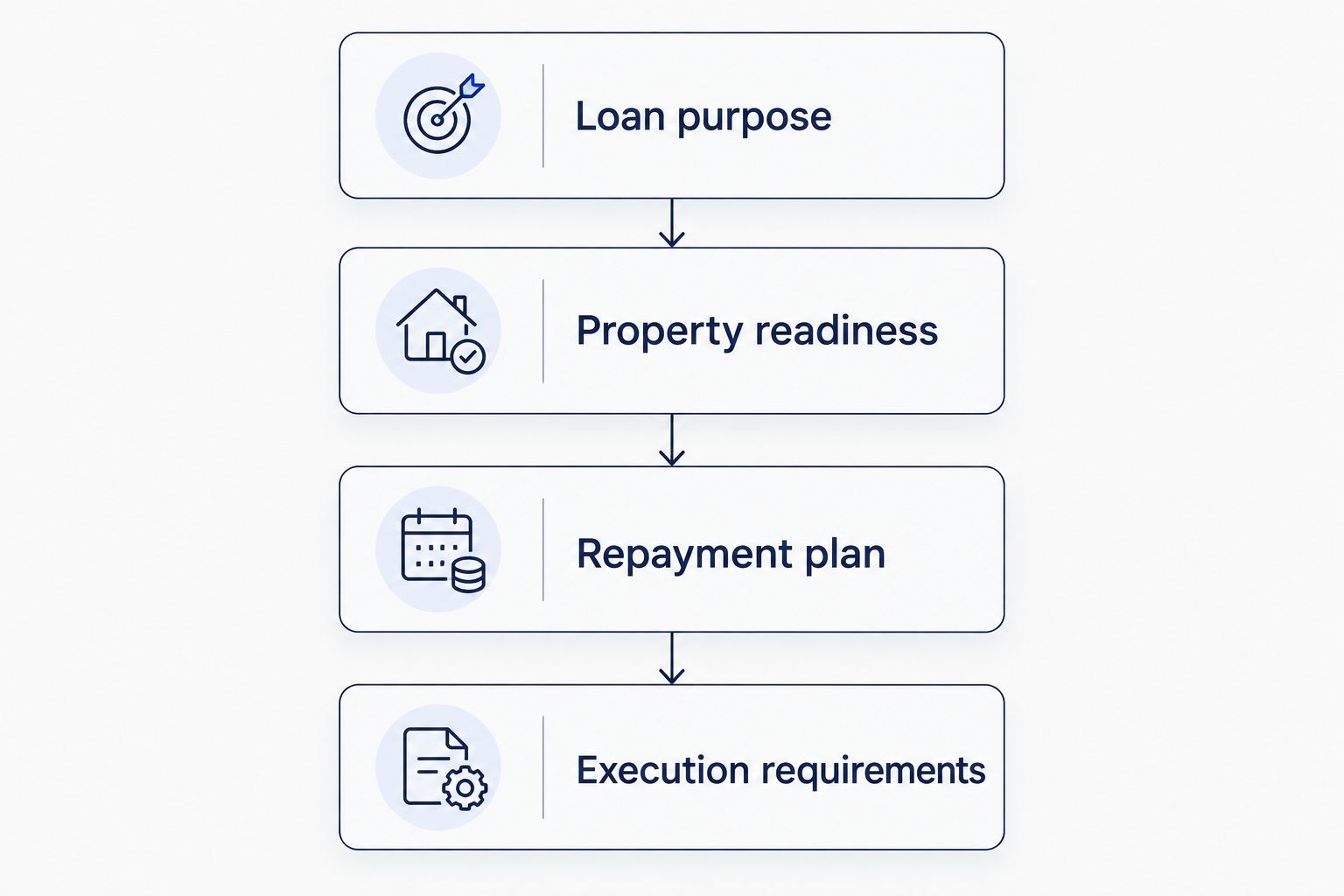
A different lender is justified when it offers a better fit for the transaction—not because an alternatives page ranks it higher. For a 2026 comparison, test these concrete reasons to change your shortlist without assuming any shortcoming in CREFCOA’s service.
Loan purpose
Separate business borrowing from investment-property financing. If the transaction requires an SBA eligibility discussion, approach lenders that can address that requirement directly.
Property readiness
Distinguish an operating property from one that needs renovation, lease-up or another material change. A bridge financing discussion and a long-term mortgage discussion should address different stages of the property’s plan.
Repayment plan
Identify whether repayment depends on operating cash flow, a sale or a refinance. A loan that closes but leaves an unsuitable maturity or exit obligation is not a sound match.
Execution requirements
Ask what must happen between pre-approval and funding. Compare required documents, third-party reports, underwriting conditions and responsibility for unresolved items.
These are transaction-based reasons to consider another provider. They are not evidence of pricing changes, outages or service problems at CREFCOA.
Compare written proposals on the same basis
A lender comparison becomes useful when each proposal addresses the same transaction. Send consistent property information and disclose the same intended use of proceeds to every lender.
Use this checklist before you accept a proposal:
- Property and purpose: Confirm the address, property type, occupancy and intended use of proceeds.
- Proceeds: Identify what the loan funds and what remains your responsibility.
- Debt service: Understand required payments, amortization and any interest-only period.
- Recourse: Establish the borrower’s and guarantor’s obligations, including applicable carve-outs.
- Maturity: Identify the repayment deadline and any extension conditions.
- Exit provisions: Read prepayment restrictions and other obligations affecting a sale or refinance.
- Closing conditions: Separate completed requirements from outstanding underwriting and third-party work.
DSCR means debt service coverage ratio. It compares qualifying income with debt service, but the income definition and underwriting treatment matter; do not assume two lenders calculate an identical result from the same rent roll.
Keep your 2026 comparison focused on the complete obligation. A favorable headline term does not compensate for a repayment structure your property cannot support.
When staying with CREFCOA is the right call
Stay with CREFCOA when its written proposal fits the property, supports your repayment plan and provides an acceptable execution path. Another lender’s broader menu does not improve a transaction that already has suitable financing.
Do not switch merely to restart the same underwriting elsewhere. First identify the unresolved issue: eligibility, structure, documentation, timing or exit provisions. If the existing proposal addresses that issue, continuing the process is a valid decision.
FAQ
What are the best CREFCOA alternatives in 2026?
Flex V Capital Ltd is a relevant direct commercial lending alternative across bridge, DSCR, hard money, SBA, CMBS and Fannie Mae financing; Live Oak Bank belongs on an SBA shortlist. Your existing bank and an approved multifamily agency lender are additional routes to assess by transaction type.
Is a direct commercial lender better than CREFCOA?
A direct commercial lender is not automatically better than CREFCOA. Compare the actual proposed program, underwriting conditions, borrower obligations and repayment structure for the same transaction.
Should I choose an SBA lender for a rental-property purchase?
Do not assume SBA financing fits a passive rental-property purchase. Establish business purpose, occupancy requirements and program eligibility before treating an SBA lender as a suitable alternative.
Does a 48-hour pre-approval mean my loan closes in 48 hours?
No. Pre-approval is an initial financing assessment, while closing depends on the applicable underwriting, documentation and closing requirements.
What documents should I prepare before comparing commercial lenders?
Prepare property operating information, a current rent roll where applicable, borrower financial information and a clear use-of-proceeds statement. Ask each lender for its transaction-specific document requirements.
What should I compare besides the interest rate?
Compare debt service, amortization, recourse, maturity, extension conditions, prepayment provisions and closing requirements. Evaluate those terms against your expected ownership period and repayment plan.
When should I stay with CREFCOA instead of switching?
Stay with CREFCOA when its written proposal fits your property, repayment plan and execution requirements. Switch only when another proposal resolves a specific transaction need more effectively.
One last thing
Ask every shortlisted lender the same question: What must be true for this loan to fund, and what must be true for me to repay it? Request both answers in writing.
For your 2026 decision, that separates a promising initial conversation from a financing structure you can evaluate. Keep the proposal that answers both questions clearly—not simply the lender that responds first.


