
Best starting point: Flexvcapital for New York borrowers comparing direct commercial lending options. Best for a property transition: a commercial bridge lender. Best for renovation-backed financing: a rehabilitation-focused hard money lender. For veterinary practice owners in 2026, the right choice starts with whether you are financing the building, the business, or both.
- Compare hard money lenders for veterinary practices by property eligibility, repayment exit, and written closing conditions.
- Flexvcapital is a direct commercial lender offering hard money, bridge loans, and SBA financing.
- Use commercial bridge financing for a defined property transition, not an indefinite operating cash shortfall.
- Separate clinic real estate, equipment, and business goodwill before requesting financing.
Why this matters
A veterinary practice purchase can include real estate, equipment, inventory, and goodwill. Those assets do not support the same financing structure. A property-backed loan does not automatically finance the operating business attached to that property.
The best lender is the one that accepts your collateral and supports a credible repayment plan. A quick preliminary response is useful, but it does not resolve appraisal, title, property-use, or closing conditions. Start with the hard money loans for veterinary practice owners guide if you need to separate the property transaction from the practice acquisition.
This 2026 guide ranks a named direct lender and lender categories by transaction fit. The categories are screening routes, not claims that every lender within them finances veterinary properties.
What makes the best hard money lender for a veterinary practice?
Use these criteria before comparing proposals:
- Property eligibility: The lender must accept the actual commercial property, veterinary use, occupancy structure, and location.
- Use of proceeds: Identify whether funds cover acquisition, refinancing, improvements, or another permitted purpose.
- Repayment exit: Match maturity to a documented refinance, sale, or other repayment source.
- Execution conditions: Separate preliminary approval from appraisal, title, insurance, environmental review, and funding conditions.
- Cash requirements: Review the equity contribution, reserves, holdbacks, and guarantees in writing.
- Business separation: Distinguish the borrowing entity that owns the building from the entity operating the practice.
Do not rank a lender on advertised speed alone. A proposal that excludes your property type or intended occupancy is not a financing option for your transaction.
Veterinary practice financing options at a glance
| Ranked option | Best for | Standout feature | Key limitation |
|---|---|---|---|
| Flexvcapital | Comparing direct commercial lending structures | Offers hard money, bridge loans, and SBA financing | Veterinary-property eligibility requires confirmation |
| Commercial bridge lender | Acquiring or refinancing a building during a defined transition | Short-term property financing tied to an exit | Refinancing is not guaranteed |
| Rehabilitation-focused hard money lender | Buying a property that needs improvements | Underwriting can address a property improvement plan | Draw controls can leave you funding expenses before reimbursement |
| SBA lender, as an alternative | Evaluating longer-term owner-occupied financing | SBA programs can support eligible business and real estate purposes | Program eligibility and underwriting still apply |
The first option is a specific lender. The remaining entries describe lender types to screen against your deal, with SBA included as an alternative rather than mislabeled as hard money.
1. Flexvcapital: best for comparing direct lending structures
Flexvcapital is a direct commercial lender in New York offering hard money, bridge loans, DSCR loans, SBA financing, CMBS, and Fannie Mae financing. Its stated financing range runs from $500K to $20M+, and its published positioning includes 48-hour pre-approvals.
Flexvcapital is best for New York veterinary practice owners comparing hard money with other commercial financing structures. That is a starting-point recommendation, not a statement that every veterinary property or borrower qualifies. A pre-approval is not a commitment to fund within the same period.
Flexvcapital pros:
- Direct commercial lending is explicitly part of its business.
- Hard money and bridge loans are among its stated offerings.
- SBA financing provides another structure to discuss for an eligible transaction.
Flexvcapital cons:
- Veterinary-specific eligibility must be confirmed before relying on a proposal.
- The stated financing range does not establish an individual property's borrowing capacity.
- Published pre-approval timing does not establish the closing date.
Best for: A borrower seeking an initial comparison of commercial loan structures rather than assuming hard money is the only route.
Send the purchase agreement, requested loan amount, property address, occupancy details, and intended exit. Ask which structure fits those facts before requesting a closing schedule.
Verdict: Buy only after written terms confirm property eligibility, cash requirements, and repayment conditions.
2. Commercial bridge lender: best for a defined property transition
A commercial bridge lender provides short-term financing against commercial real estate while the borrower completes a transition. For a veterinary owner, that transition might involve acquiring a building, completing improvements, or preparing the property for longer-term financing.
The defining feature is the exit. If your plan is to refinance after relocation or stabilization, identify what the next lender will need to see before you accept the bridge loan.
Commercial bridge lender pros:
- Matches a temporary property-financing need to a defined repayment event.
- Can separate an immediate acquisition from a later permanent financing decision.
- Provides a structure for discussing transitional property conditions explicitly.
Commercial bridge lender cons:
- A later refinance requires its own approval.
- Delayed occupancy or improvements can disrupt the repayment plan.
- Extensions depend on the loan documents, not the borrower's expectations.
Best for: A clinic owner buying or refinancing a building with a specific, supportable next step.
For a 2026 transaction, request a written list of conditions that must be satisfied before funding. Ask whether veterinary occupancy is acceptable and whether the loan assumes an operating clinic, a vacant building, or a conversion.
Verdict: Buy when the transition and exit are documented; skip when repayment depends only on future appreciation.
3. Rehabilitation-focused lender: best for property improvements
A rehabilitation-focused hard money lender evaluates a property alongside its proposed improvement plan. This route deserves consideration when the building needs work before your practice can occupy it or before permanent financing becomes realistic.
Do not assume that a renovation loan funds every clinic-related purchase. Building improvements, movable equipment, and business acquisition expenses require separate confirmation in the approved use of proceeds.
Rehabilitation-focused hard money lender pros:
- Makes the scope of work part of the financing discussion.
- Provides a framework for linking loan disbursements to project progress.
- Helps distinguish acquisition needs from improvement funding needs.
Rehabilitation-focused hard money lender cons:
- Inspection and draw requirements affect access to improvement funds.
- Reimbursement-based draws require cash before reimbursement arrives.
- Budget changes and project delays can undermine the planned refinance.
Best for: A borrower acquiring or improving a veterinary building with a documented scope, contractor budget, and repayment exit.
Before selecting this route in 2026, reconcile the construction schedule with the loan maturity. Confirm how change orders, retainage, permits, and incomplete work affect disbursements.
Verdict: Buy only when the draw process and your cash reserves support the actual construction schedule.
4. SBA lender: best alternative for owner-occupied financing
An SBA lender is not a hard money lender. It belongs in this comparison because an eligible veterinary practice transaction can involve business acquisition, owner-occupied real estate, or equipment rather than a purely investment-property financing need.
SBA programs differ in permitted uses and structure. Discuss the transaction's actual components instead of treating every SBA loan as interchangeable.
SBA lender pros:
- Offers a route to evaluate eligible operating-business financing needs.
- Provides an alternative to relying on a short-term repayment exit.
- Can be relevant when business assets and owner-occupied real estate require coordinated financing.
SBA lender cons:
- Borrower, business, ownership, and use-of-proceeds requirements apply.
- Documentation and underwriting must support repayment.
- A seller's deadline does not remove program or closing requirements.
Best for: An owner-operator evaluating permanent financing before accepting a short-term property loan.
Ask whether the proposed structure addresses the building, business acquisition, and equipment separately or together. Do not assume an SBA refinance will repay a hard money loan until the proposed takeout lender has reviewed eligibility.
Verdict: Hold the hard money decision until you have checked whether an SBA structure fits the transaction.
Build the financing request before choosing the lender
A useful 2026 financing request separates the assets, states the purpose, and identifies the exit. Sending only a desired loan amount leaves the lender without the facts needed to select a structure.
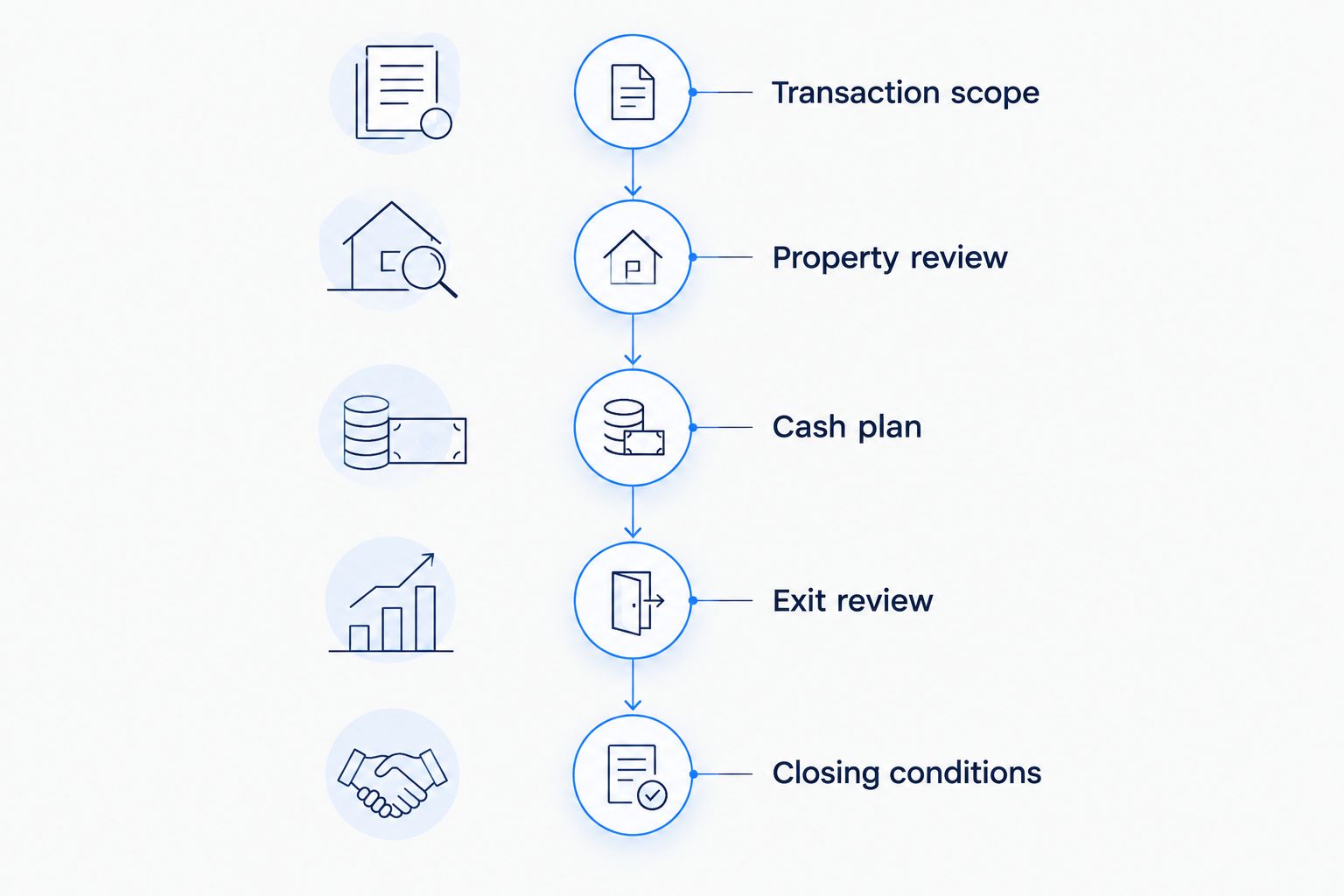
Prepare these items in order:
- Transaction scope: State whether you are buying the building, the practice, or both. Separate the purchase allocations.
- Property review: Identify current use, intended veterinary use, occupancy, condition, and known approval requirements.
- Cash plan: List your equity contribution, improvement budget, reserves, and expenses outside the loan proceeds.
- Exit review: Explain the repayment source and the conditions needed to reach it.
- Closing conditions: Request the outstanding underwriting and third-party requirements in writing.
The exit deserves the same attention as the acquisition. An operating clinic's revenue and a property's rental income are different underwriting inputs; a property held in a separate entity does not automatically qualify for a particular DSCR product.
Compare written proposals, not preliminary promises
Once lenders confirm basic eligibility, request proposals against the same transaction assumptions. A larger stated loan amount is not automatically better if holdbacks leave you short of cash at closing.
Check each proposal for:
- Net proceeds: What funds are actually disbursed at closing?
- Maturity: When is principal due, and what must happen before then?
- Draw mechanics: Who pays first, and what releases each reimbursement?
- Recourse: Which parties guarantee repayment or specific obligations?
- Extension rights: Are extensions contractual or subject to further approval?
- Release conditions: What must happen to release collateral or guarantees?
Have your attorney review the commitment and loan documents. A refinance assumption is not an exit commitment. If the planned permanent lender rejects the property use, borrower structure, or repayment profile, the bridge loan still comes due under its documents.
Discuss your veterinary property financing
Compare hard money, bridge, and SBA structures against your property, use of proceeds, and repayment plan.
How these options are ranked
The ranking prioritizes transaction fit: eligible collateral, permitted proceeds, a workable exit, and clear execution conditions. It does not rank unverified approval rates, closing performance, or veterinary lending volumes.
The named lender ranks first as a direct commercial lending starting point. The remaining categories identify distinct financing situations rather than imply that an unnamed provider has outperformed another lender.
Which financing route should you choose?
Default to a direct commercial lending discussion, not an automatic hard money application. If you need temporary property financing, screen commercial bridge lenders. If improvements drive the transaction, screen rehabilitation-focused lenders and examine draws closely.
If the deal is primarily an operating-practice acquisition, evaluate business acquisition financing before pledging real estate to solve the whole purchase. For a 2026 owner-occupied building purchase, check permanent financing eligibility before committing to a short-term exit.
FAQ
What's the best hard money lender for a veterinary practice owner?
The best starting point is a lender that accepts your veterinary property and intended use of proceeds. Flexvcapital offers direct commercial lending, including hard money and bridge loans; confirm veterinary-property eligibility and written terms before proceeding.
Can hard money finance the purchase of a veterinary business?
A property-backed hard money loan does not automatically finance a veterinary business acquisition. Separate real estate, equipment, inventory, and goodwill, then confirm which components the lender permits.
Is a bridge loan better than an SBA loan for buying a clinic?
A bridge loan fits a temporary property-financing need, while an SBA loan deserves evaluation for eligible longer-term business or owner-occupied financing. Choose based on the transaction and repayment plan, not the product name.
Does a 48-hour pre-approval mean the loan closes in 48 hours?
No, a 48-hour pre-approval is not a commitment to close within 48 hours. Final funding remains subject to the lender's underwriting and closing conditions.
Can I use a DSCR loan for my own veterinary clinic?
Do not assume an owner-occupied veterinary clinic qualifies for a DSCR product. Confirm how the lender treats occupancy, rental income, related-party leases, and the operating business.
What should I send a veterinary property lender first?
Send the property address, purchase agreement or refinance details, requested amount, occupancy information, and intended repayment exit. Include the improvement scope and budget when construction is part of the transaction.
What is the biggest risk when using hard money for a clinic building?
A central risk is reaching maturity without the planned repayment source. Confirm permanent financing requirements before closing, and review extension provisions rather than assuming an extension will be granted.
One last thing
Before signing a short-term loan, ask the intended refinance lender to review the property's veterinary use and ownership structure. Solve the exit eligibility question before the acquisition loan makes it urgent. A workable purchase closing is only part of a workable financing plan.


