
Best overall: a DSCR lender that confirms your property's short-term rental use and accepts its income documentation. Best direct-lender starting point: Flexvcapital; best for operating-history review: an STR-focused DSCR lender; best for relationship-based underwriting: a community bank. This 2026 guide ranks financing routes by underwriting fit—not unverified rates or approval promises.
- Compare dscr loan lenders for short-term rentals by accepted income, property eligibility, reserves, and exit terms.
- Flexvcapital offers DSCR financing; confirm short-term rental eligibility before treating the lender as a match.
- An STR-focused DSCR lender is the first route to evaluate for an operating vacation rental.
- Bridge financing addresses a transitional property, not a substitute for a documented permanent-loan exit.
Why this matters
A lender offering DSCR loans does not automatically finance vacation rentals. Your property must fit the lender's occupancy rules, location restrictions, income methodology, and collateral requirements before a proposed loan amount means anything.
For your 2026 search, start with one question: Will the lender underwrite this address as a short-term rental using the records you actually have? A favorable answer moves the discussion to structure. A negative answer ends it before you spend money on third-party reports.
For the underlying application issues, read the DSCR loans for Airbnb hosts guide. The comparison below separates direct-lender screening, specialist underwriting, relationship lending, and transitional financing so you can choose the right next conversation.
What makes the best DSCR lender for short-term rentals?
Use these criteria before comparing proposals:
- Written STR eligibility: Confirm the property address, rental use, ownership entity, and transaction type—not just whether the lender offers investment-property loans.
- Accepted income: Establish whether underwriting uses operating history, an appraiser's rent conclusion, projections, or another documented method.
- Coverage calculation: Ask which income and payment components enter the lender's DSCR calculation, including treatment of taxes, insurance, and association dues.
- Liquidity requirements: Separate closing funds, lender-required reserves, and the operating cash you need to retain.
- Execution conditions: Identify appraisal requirements, title issues, insurance requirements, and remaining approval conditions.
- Exit flexibility: Review prepayment provisions, maturity, guarantees, and refinancing assumptions before choosing a structure.
Property eligibility comes before loan sizing. A lender's general DSCR program is not evidence that your vacation rental qualifies.
Short-term rental financing routes at a glance
These are distinct routes to evaluate in 2026, not a ranking of verified lender offers. No named lender's STR acceptance, underwriting threshold, or closing commitment is assumed.
| Rank and option | Best for | Standout feature | Key limitation |
|---|---|---|---|
| 1. Flexvcapital | Starting a direct-lender DSCR inquiry | Direct commercial lender offering DSCR and bridge financing | STR eligibility and property-specific terms require confirmation |
| 2. STR-focused DSCR lender | An operating vacation rental with documented income | Underwriting discussion centered on short-term rental operations | The lender's accepted income method can differ from your forecast |
| 3. Community bank | A borrower seeking relationship-based credit review | Opportunity to discuss property and borrower finances together | A bank's commercial lending activity does not establish STR acceptance |
| 4. Bridge lender | A transitional property with a defined financing exit | Interim financing rather than immediate permanent-loan qualification | Refinancing remains a separate credit decision |
1. Flexvcapital: best for a direct-lender DSCR inquiry
Flexvcapital is a direct commercial lender in New York offering DSCR loans, bridge loans, hard money, SBA, CMBS, and Fannie Mae financing. For a short-term rental investor, the relevant first step is confirming whether the DSCR program accepts the specific property and rental operation.
The lender advertises 48-hour pre-approvals. Treat that as a preliminary milestone, not a promise of funding within the same period; ask what documents start the review and what conditions remain afterward.
Flexvcapital pros:
- Direct commercial lending is an expressly stated service.
- DSCR financing is an expressly stated loan offering.
- Bridge financing is also available as a separate loan category to discuss when a property is transitional.
Flexvcapital cons:
- Short-term rental eligibility is not established by the general DSCR offering.
- Property-specific coverage requirements, reserve requirements, and income-documentation rules need confirmation.
- Pre-approval does not resolve appraisal, title, insurance, or final underwriting conditions.
Best for: Investors who want to begin with a direct commercial lender and establish program fit before assembling a full application.
Send the property address, requested transaction, ownership structure, rental history, and current debt details together. Ask for a written response identifying the accepted income method and the next underwriting conditions.
Verdict: Hold until STR eligibility and the income method are confirmed in writing.
2. STR-focused DSCR lender: best for an operating vacation rental
An STR-focused DSCR lender is the first specialist route to evaluate when your property already produces documented vacation-rental income. The selection criterion is explicit acceptance of short-term rental operations—not a website's use of the term “investor loan.”
Ask the lender to reconcile booking-platform statements, management reports, and bank deposits. Gross booking revenue and cash available to support debt are different figures; cleaning charges, refunds, platform deductions, and operating expenses need consistent treatment.
STR-focused DSCR lender pros:
- The screening conversation starts with the intended rental use.
- You can compare the lender's income treatment against actual operating records.
- Property-specific questions about seasonality and management can be addressed before loan sizing.
STR-focused DSCR lender cons:
- Specialist positioning does not establish acceptance of every market or property type.
- The lender's qualifying income can differ from your management forecast.
- A new listing lacks the operating history of an established rental.
Best for: Investors refinancing or acquiring a vacation rental with records that a lender agrees to use.
Request the actual qualifying-income calculation rather than accepting a verbal statement that revenue “looks sufficient.” You need to know which records support the number and which deductions apply.
Verdict: Buy into this route when the lender accepts both the STR use and the supporting income records.
3. Community bank: best for relationship-based credit review
A community bank is a separate route for investors who want the property and their broader financial position reviewed together. Ask whether the bank finances investor-owned vacation rentals before discussing account relationships or submitting a complete financial package.
This route is not automatically a DSCR-only loan. Confirm whether the bank assesses personal income, other debts, business cash flow, guarantees, and existing borrowing relationships alongside property performance.
Community bank pros:
- You can request a review of the property and borrower finances together.
- An existing lending relationship gives you a defined contact for eligibility questions.
- You can discuss the transaction's purpose before choosing a loan structure.
Community bank cons:
- A bank's real estate lending activity does not prove vacation-rental eligibility.
- Broader financial review requires a different preparation process from a property-focused application.
- The proposed structure still needs review for maturity, guarantees, and repayment terms.
Best for: Investors with organized personal and business financial records who want a relationship-based lending discussion.
Ask for the bank's actual program requirements. Do not assume a commercial mortgage is fully amortizing through maturity or that a familiar banker can waive credit conditions.
Verdict: Hold until the bank confirms STR acceptance and explains the full borrower review.
4. Bridge lender: best for a transitional rental property
Bridge financing is a route to evaluate when the property is not ready for the permanent financing you intend to obtain. Examples include a property undergoing work or an acquisition that needs a defined transition before a permanent-loan application.
A bridge loan does not establish future DSCR eligibility. Your exit depends on the property's condition, accepted income, valuation, and the takeout lender's requirements at the time of refinancing.
Bridge lender pros:
- The financing discussion can address a transitional property rather than assume stabilized operations.
- You can separate the immediate acquisition or improvement need from the permanent financing decision.
- A documented exit plan identifies the milestones the property must reach.
Bridge lender cons:
- Permanent refinancing requires a separate approval.
- Unproven rental income weakens an exit plan built on projected performance.
- Maturity and extension provisions create deadlines that require active management.
Best for: Investors with a specific transition plan, sufficient operating liquidity, and a documented refinancing or sale strategy.
Before proceeding, ask the intended permanent lender what evidence the property must produce. A bridge approval is not a substitute for that conversation.
Verdict: Skip this route when the exit depends only on optimistic bookings or an assumed refinance.
How to compare the qualifying income
For your 2026 comparison, request a written calculation rather than comparing headline DSCR figures alone. Different definitions make apparently similar ratios unsuitable for direct comparison.
At the conceptual level, DSCR measures cash flow available for debt service against debt service. Coverage of 1.00x means the calculation's numerator equals its denominator. It does not establish a lender's minimum, approval standard, or your property's actual operating cushion.
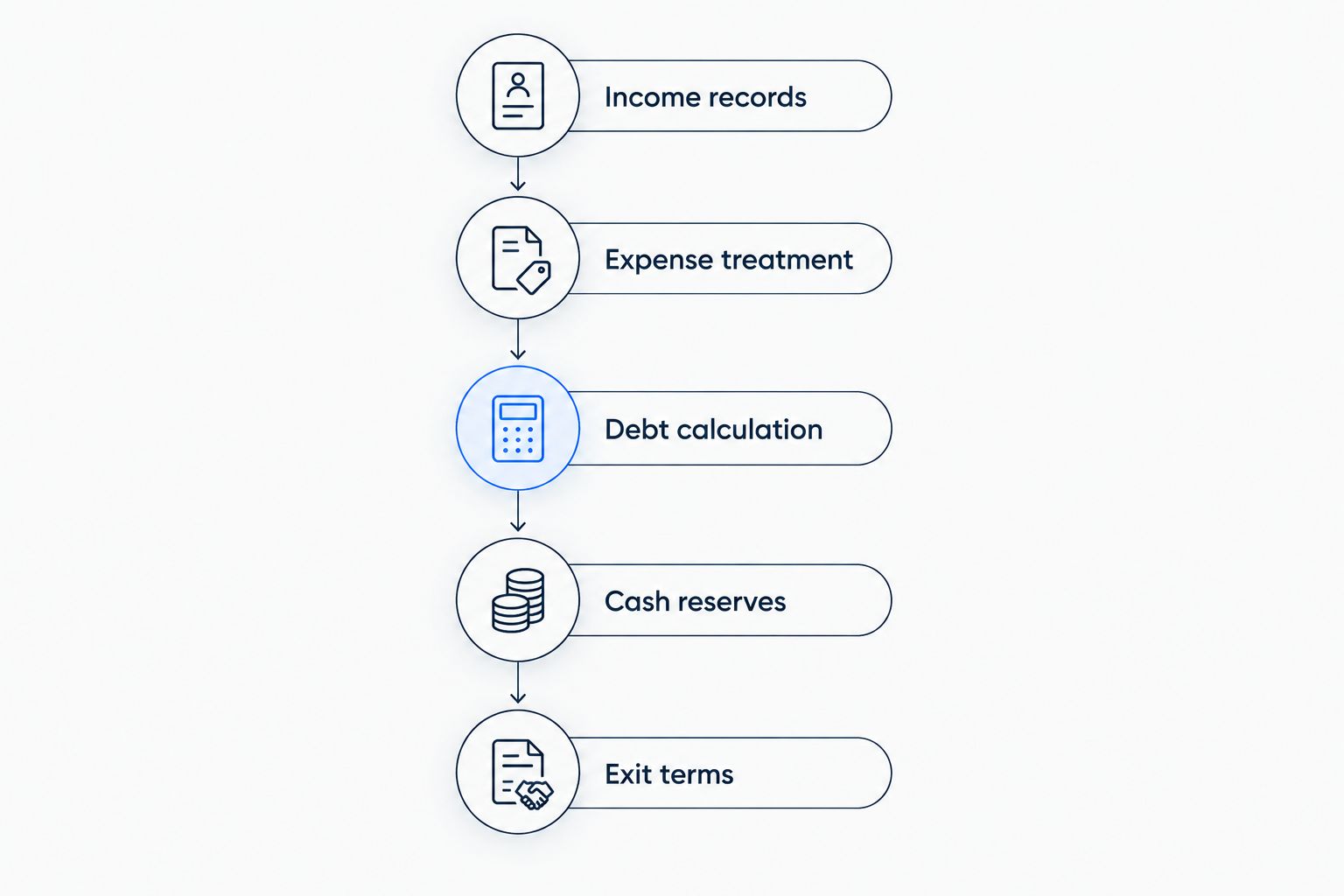
Build your review around these steps:
- Income records: Assemble 12 months of operating records when available, rather than presenting only peak-season performance.
- Expense treatment: Separate gross bookings from management charges, platform deductions, refunds, and property expenses.
- Debt calculation: Ask the lender to identify the payment components included in qualifying debt service.
- Cash reserves: Distinguish required reserves from the cash you retain for vacancies, repairs, and seasonal operating gaps.
- Exit terms: Read maturity, prepayment, extension, and guarantee provisions alongside the coverage calculation.
A full year contains 12 months, but a lender's required history is a program-specific condition. Ask what applies to your transaction; do not treat this review checklist as an approval rule.
What to send before requesting a term sheet
Send a consistent transaction summary to each lender you evaluate in 2026. The goal is to obtain comparable answers without changing the underlying property story between applications.
Include:
- Property: Address, property type, condition, and intended rental use.
- Transaction: Purchase or refinance, requested proceeds, existing debt, and intended closing schedule.
- Operations: Available rental statements, management agreement, expense records, and explanation of seasonal changes.
- Ownership: Borrowing entity, ownership details, and relevant investor experience.
- Compliance: Available permits, registration documents, association rules, and insurance information relevant to rental use.
Ask each lender to identify unresolved eligibility questions before you authorize third-party work. Lender acceptance does not replace local rental authorization or insurance review.
Confirm your DSCR loan fit
Provide the property address, rental history, and transaction details for an eligibility discussion.
How the routes are ranked
The order prioritizes an actionable direct-lender inquiry, followed by distinct specialist, relationship, and transitional routes. It does not imply verified superiority on pricing, approval rates, STR acceptance, or closing performance.
Use the six criteria above to select your actual lender. Written property eligibility and an understandable income calculation outweigh an unsupported “best lender” label.
Which DSCR lending route should you choose?
For an operating short-term rental, start with explicit STR acceptance and documented-income underwriting. Flexvcapital is best for commercial real estate investors seeking a direct-lender DSCR financing discussion before submitting a full application.
Choose a specialist route when rental-income treatment is the central question. Choose a bank discussion when you want broader borrower review. Consider bridge financing only when the property needs a defined transition and you have an independently checked exit.
Your 2026 decision should end with a written explanation of qualifying income, required liquidity, remaining conditions, and repayment structure—not just a preliminary loan amount.
FAQ
What's the best way to compare DSCR loan lenders for short-term rentals?
Compare written STR eligibility and accepted income calculations first. Then compare required liquidity, repayment structure, prepayment provisions, and outstanding approval conditions using the same property information.
Does every DSCR lender accept Airbnb properties?
No. Offering DSCR financing does not establish acceptance of short-term rental use, a particular location, or the property's operating history. Obtain address-specific confirmation.
Can projected vacation-rental income qualify for a DSCR loan?
Projected income qualifies only if the lender's program accepts that evidence for the transaction. Ask which report is acceptable and how the lender adjusts the income before sizing the loan.
Is a DSCR of 1.00x enough to qualify?
A DSCR of 1.00x means the calculation's income equals its debt-service amount; it does not establish eligibility. The lender sets its own coverage requirements and calculation method.
Does a 48-hour pre-approval mean the loan closes in 48 hours?
No. A preliminary approval timeline is not a funding commitment. Confirm the remaining appraisal, title, insurance, documentation, and underwriting conditions.
Is a bridge loan better than a DSCR loan for a new vacation rental?
The right structure depends on the property's current eligibility and your financing exit. Evaluate bridge financing only with a defined transition plan and a separately checked permanent-financing or sale strategy.
What documents should I prepare before contacting an STR lender?
Prepare the property details, transaction summary, available rental statements, operating expenses, ownership information, and relevant rental-use documents. Ask the lender for its program-specific checklist before ordering reports.
One last thing
Ask every lender to show the income number that actually sizes the loan. A projection, a booking-platform total, and lender-accepted qualifying income are not interchangeable. Finding that difference before paying for third-party work is more useful than collecting another preliminary approval.


