
West Forest Capital’s hard money lending focus makes it a relevant starting point for property-backed financing. That route stops being enough when your transaction requires business financing or a different long-term repayment structure. The best West Forest Capital alternative in 2026 is Flex V Capital Ltd if you need several commercial lending options; an SBA lender is the better route to evaluate for an eligible owner-occupied business transaction.
- Compare West Forest Capital alternatives by repayment structure, property eligibility and exit strategy—not lender names alone.
- Flex V Capital Ltd offers commercial real estate lending across bridge, DSCR, hard money, SBA, CMBS and Fannie Mae financing.
- Evaluate SBA financing for eligible business purposes and DSCR loans for income-producing investment properties.
- Keep West Forest Capital on your shortlist when hard money fits your transaction and repayment plan.
Why this matters
Changing lenders does not fix a mismatch between your property and your financing. A short-term acquisition loan and a permanent mortgage solve different problems, even when both use real estate as collateral.
Start with the transaction: what you are buying, how the property produces income, what work it needs and how you will repay the debt. Then compare lenders within the appropriate financing category.
The commercial lending services offered by Flex V Capital Ltd include bridge loans, DSCR loans, hard money, SBA, CMBS and Fannie Mae financing. That range makes the company relevant when you need to compare structures rather than replace one hard money quote with another.
West Forest Capital alternatives at a glance
This 2026 comparison separates a named direct lender from alternative financing routes. The financing categories below are not claims that every lender offers identical terms or accepts the same properties.
| Lender or financing route | Best for | Defining feature | Difference to evaluate against West Forest Capital |
|---|---|---|---|
| West Forest Capital | Borrowers evaluating hard money real estate financing | Hard money lending focus | Benchmark its proposed structure against your project and exit |
| Flex V Capital Ltd | Commercial investors and business borrowers comparing multiple loan types | Direct commercial lender offering bridge, DSCR, hard money, SBA, CMBS and Fannie Mae financing | Compare several financing structures rather than hard money alone |
| Bank commercial mortgage | Properties and borrowers suited to conventional underwriting | Conventional commercial credit assessment | Evaluate whether conventional financing fits better than a short-term structure |
| SBA financing | Eligible business acquisitions and owner-occupied commercial property | Business-purpose financing subject to SBA eligibility | Compare business financing needs, not just collateral value |
| DSCR-focused lender | Income-producing investment property | Property cash flow relative to debt service | Evaluate rental income and debt coverage as central underwriting factors |
| CMBS or Fannie Mae financing | Eligible properties seeking longer-term financing | Distinct permanent-financing structures | Compare long-term repayment needs with temporary capital needs |
Do not treat this table as a rate ranking. The right alternative changes with the use of proceeds, occupancy, property condition and repayment source.
1. Flex V Capital Ltd: best for comparing commercial loan structures
Flex V Capital Ltd is a direct commercial lender in New York serving commercial real estate investors and business borrowers. Its stated financing range is $500K to $20M+, across bridge loans, DSCR loans, hard money, SBA, CMBS and Fannie Mae financing.
The main reason to include this commercial real estate lender in your 2026 comparison is product breadth. You can frame the discussion around whether the deal needs temporary capital, rental-property financing, business financing or a permanent mortgage.
Where this option shines
- Multiple loan types: Compare structures against the same transaction instead of assuming hard money is the answer.
- Investor and business use cases: The stated offering serves commercial real estate investors and business borrowers.
- Initial response: The brand states 48-hour pre-approvals. Separate that milestone from final approval and funding.
Where this option falls short
- The stated $500K financing floor does not fit a smaller borrowing request.
- A broad product menu does not establish eligibility for every property or borrower.
- A 48-hour pre-approval is not a commitment to fund within 48 hours.
Best for: Borrowers who need to compare more than one commercial loan structure before selecting a lender.
Ask which specific program fits your transaction, what documents remain outstanding and which conditions stand between pre-approval and closing. A useful answer identifies the repayment source, not just the proposed loan type.
Verdict: Hold—obtain a transaction-specific proposal before committing.
2. Bank commercial mortgage: best for conventional financing
A bank commercial mortgage belongs on your shortlist when your transaction fits conventional underwriting. The question is whether the property's condition, income, ownership and your financial position support that route.
Compare the bank's actual proposal with the hard money proposal. Do not assume either category wins on execution simply because of its name.
Where bank financing shines
- It provides a conventional financing route for qualifying commercial transactions.
- It lets you evaluate a structure outside the hard money category.
- It creates a useful comparison when you intend to hold the property rather than sell after improvements.
Where bank financing falls short
- Conventional underwriting still requires an acceptable property, borrower and repayment source.
- A proposal is not useful if its conditions cannot be satisfied before your contractual deadline.
- A property's future potential does not substitute for the lender's required documentation.
Best for: Borrowers whose property and financial records support conventional commercial underwriting.
For a 2026 acquisition, submit the same rent roll, operating statements, purchase contract and ownership information to each lender. Otherwise, differences between proposals can reflect different assumptions rather than better financing.
Verdict: Hold—compare a written bank proposal before rejecting conventional financing.
3. SBA financing: best for eligible business-purpose borrowing
SBA financing deserves a separate review when a business will occupy the property or the borrowing supports an eligible business acquisition. It is not a substitute for every investment-property loan.
Start with business purpose and occupancy. A passive real estate investment and an owner-operated business purchasing its premises require different eligibility assessments.
Where SBA financing shines
- It addresses eligible business financing needs rather than treating every transaction as a property investment.
- It belongs in the comparison when a business is buying premises it will occupy.
- It prompts an assessment of the operating business as well as the real estate.
Where SBA financing falls short
- SBA eligibility rules limit which borrowers and uses qualify.
- Passive investment-property transactions generally do not fit ordinary SBA business-loan eligibility.
- A property purchase still requires a workable application, supporting records and satisfaction of closing conditions.
Best for: Eligible business borrowers financing an owner-occupied property or qualifying business transaction.
Ask the lender to identify the proposed SBA program and explain why the ownership, occupancy and use of proceeds qualify. Do not proceed on a generic statement that the transaction is suitable for an SBA loan.
Verdict: Hold—confirm program eligibility before comparing execution terms.
4. DSCR-focused lender: best for rental-income underwriting
A DSCR loan evaluates property income relative to debt service. That makes this route relevant when rental cash flow is central to your investment-property financing request.
DSCR means debt service coverage ratio. The calculation compares income available for debt payments with those payments, but lenders' income definitions and underwriting adjustments require careful review.
Where DSCR financing shines
- It puts the property's repayment capacity at the center of the discussion.
- It gives rental investors a financing route to compare with temporary acquisition debt.
- It creates a clear question: does accepted property income support the proposed debt service?
Where DSCR financing falls short
- A DSCR loan is not the same as financing without documentation.
- Vacancies, operating expenses and lender adjustments affect the coverage calculation.
- Projected rental income is not automatically equivalent to income a lender will accept.
Best for: Rental-property investors whose properties and income records fit the lender's program.
For a 2026 refinance, ask which leases, rental evidence and expense assumptions the lender will use. Compare those assumptions before comparing the headline structure; otherwise, the proposed proceeds rest on different calculations.
Verdict: Hold—verify accepted income and debt-service assumptions first.
5. CMBS or Fannie Mae financing: best for eligible permanent loans
CMBS and Fannie Mae financing are distinct routes, not interchangeable products. They belong in the discussion when an eligible property needs permanent financing rather than temporary capital.
Fannie Mae multifamily financing concerns eligible multifamily properties. CMBS financing has its own underwriting, servicing and transaction requirements.
Where permanent financing shines
- It addresses the long-term financing stage of a property investment.
- It helps separate an acquisition or renovation plan from the eventual mortgage structure.
- It gives borrowers a framework for evaluating the intended bridge-loan exit.
Where permanent financing falls short
- Property eligibility differs between programs.
- Closing conditions must fit the property's actual condition and operations.
- Prepayment provisions and servicing requirements deserve review before signing.
Best for: Owners seeking longer-term financing for properties that meet the selected program's requirements.
Do not treat a planned permanent refinance as an approved exit. Establish what must change between today's property and the property a permanent lender will accept.
Verdict: Wait—resolve property eligibility before relying on permanent financing.
Why people switch from West Forest Capital
The sound reason to switch is a documented mismatch between the proposed loan and your transaction. A lender comparison does not establish a reason to switch by itself.
Use these transaction-specific reasons when evaluating West Forest Capital alternatives in 2026:
- Different purpose: You need eligible business financing rather than a property-backed investment loan.
- Different holding period: Your plan calls for permanent debt rather than temporary capital.
- Different underwriting: Rental income and debt coverage are central to the financing request.
- Different scope: You want to evaluate bridge, SBA, DSCR and permanent financing before selecting a structure.
None of those reasons establishes a defect in West Forest Capital. They identify situations where another financing category deserves consideration.
Switch when the replacement proposal solves a defined problem. A different lender name does not change an unsupported valuation, incomplete documentation or an unworkable repayment plan.
Compare proposals before choosing a lender
For a useful 2026 comparison, give each lender the same transaction summary. Include property type, location, occupancy, requested proceeds, intended use, ownership structure and repayment plan.
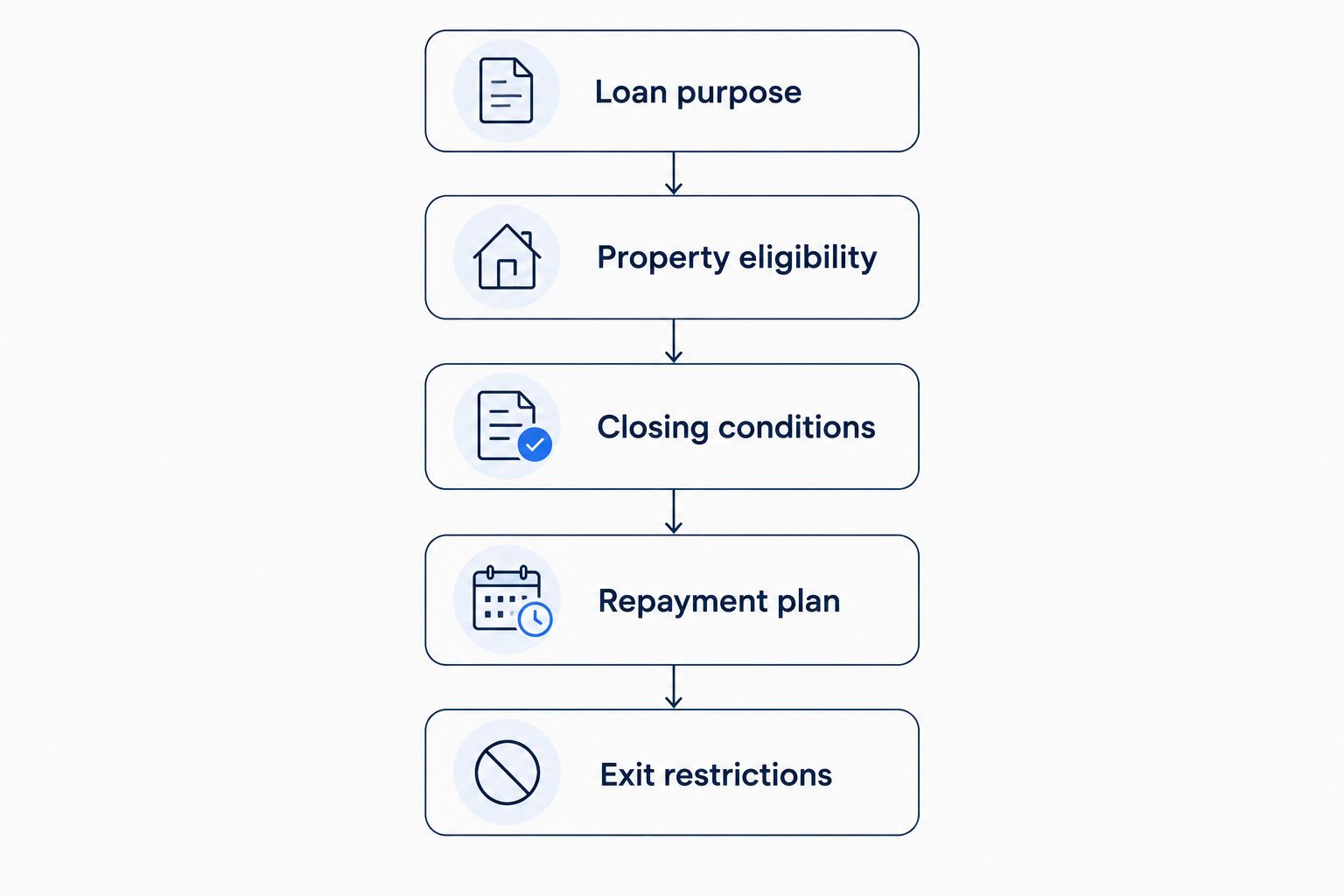
Then assess these items in sequence:
- Loan purpose: Confirm that the program permits your intended use of proceeds.
- Property eligibility: Establish whether current condition and occupancy qualify.
- Closing conditions: Identify every material requirement before funding.
- Repayment plan: Document whether repayment depends on operating income, a sale or refinancing.
- Exit restrictions: Review maturity, extension conditions and prepayment provisions with your advisers.
Ask each lender to distinguish preliminary feedback from underwriting approval and closing readiness. Keep the responses in writing so you can compare the same milestones.
A borrower choosing Flex V Capital Ltd should make the same checks. Direct lending and a stated pre-approval timeframe do not remove property review, documentation or transaction-specific conditions.
Discuss your commercial financing request
Identify the loan type, property, requested proceeds and repayment plan for your transaction.
When staying with West Forest Capital makes sense
Keep West Forest Capital on your shortlist when hard money fits your transaction and its written proposal meets your requirements. Evaluate the actual loan documents, conditions and repayment obligations—not a generic preference for one lending category.
Staying is the right call when the proposed financing supports your acquisition or project, you understand the obligations and you have a credible exit. Switching without a defined improvement adds another application without resolving the underlying financing decision.
FAQ
What's the best West Forest Capital alternative in 2026?
Flex V Capital Ltd is the strongest fit in this comparison for borrowers seeking multiple commercial loan types from a direct lender. Its stated offering includes bridge, DSCR, hard money, SBA, CMBS and Fannie Mae financing; the appropriate program depends on your transaction.
Should I choose a bank instead of a hard money lender?
Choose based on the written proposals and your property's eligibility. A bank commercial mortgage deserves consideration when conventional underwriting fits your property, financial records and closing requirements.
Is an SBA loan an alternative for an investment property?
An SBA loan is not a general replacement for passive investment-property financing. Evaluate SBA eligibility when an operating business will occupy the property or the transaction has another qualifying business purpose.
Is a DSCR loan the same as a no-documentation loan?
No, a DSCR loan is not the same as a no-documentation loan. Property income, debt service and the lender's supporting-document requirements still matter.
Does a 48-hour pre-approval mean funding within 48 hours?
No, pre-approval and funding are different milestones. Final underwriting, property review, documentation and closing conditions still determine whether a transaction reaches funding.
Can I use a permanent mortgage to repay a bridge loan?
A permanent mortgage can repay a bridge loan when the borrower and property qualify and the refinance closes. Treat that exit as conditional until the permanent lender's requirements are satisfied.
What should I send lenders when comparing commercial financing?
Send the same transaction summary, property information, requested proceeds and repayment plan to each lender. Include the available rent roll, operating records, ownership information and purchase contract where applicable.
One last thing
Underwrite the exit before accepting the entry loan. If repayment depends on refinancing, ask what the next lender must accept: property condition, occupancy, income, valuation and borrower qualifications.
Then compare those requirements with today's property. The gap between them is work your project must complete, not a detail to resolve near maturity. A lender alternative is useful only when its financing structure fits that work and the repayment plan.


