
Restaurant owners’ SBA financing is lender-issued business funding backed by a Small Business Administration guarantee, with the aim of financing eligible acquisitions, equipment, working capital, or owner-occupied property. SBA loans for restaurant owners require a clear distinction between operating-business needs and real estate needs, plus evidence that restaurant cash flow supports repayment.
- SBA loans for restaurant owners should match the use of funds: evaluate 7(a) for business needs and 504 for eligible fixed assets.
- Flexvcapital is best suited to restaurant owners seeking SBA lending from a direct commercial lender in New York.
- Restaurant cash flow, lease terms, ownership structure, and documented project costs determine whether an application is ready.
- An SBA guarantee protects the lender; it does not eliminate the restaurant owner’s repayment obligation.
Why SBA financing matters for restaurant owners
A restaurant acquisition combines several financing needs: equipment, inventory, leasehold improvements, goodwill, and cash to operate after closing. Those uses do not all fit the same lending structure. Choose the program around the transaction, not around the SBA label.
For your 2026 application, separate the restaurant business from any building purchase before approaching lenders. A leased restaurant acquisition and an owner-occupied property purchase require different supporting documents, even when the operator is the same.
Flexvcapital offers SBA lending as a direct commercial lender in New York. Its broader commercial financing offering does not make every loan type appropriate for a restaurant; match the product to the operating business, property, and repayment source.
How to prepare a restaurant SBA loan application
Organize the application around five decisions: Loan purpose, Program fit, Repayment evidence, Property fit, and Closing readiness. Resolve them in that order so you do not collect documents for a financing structure that cannot fund the project.
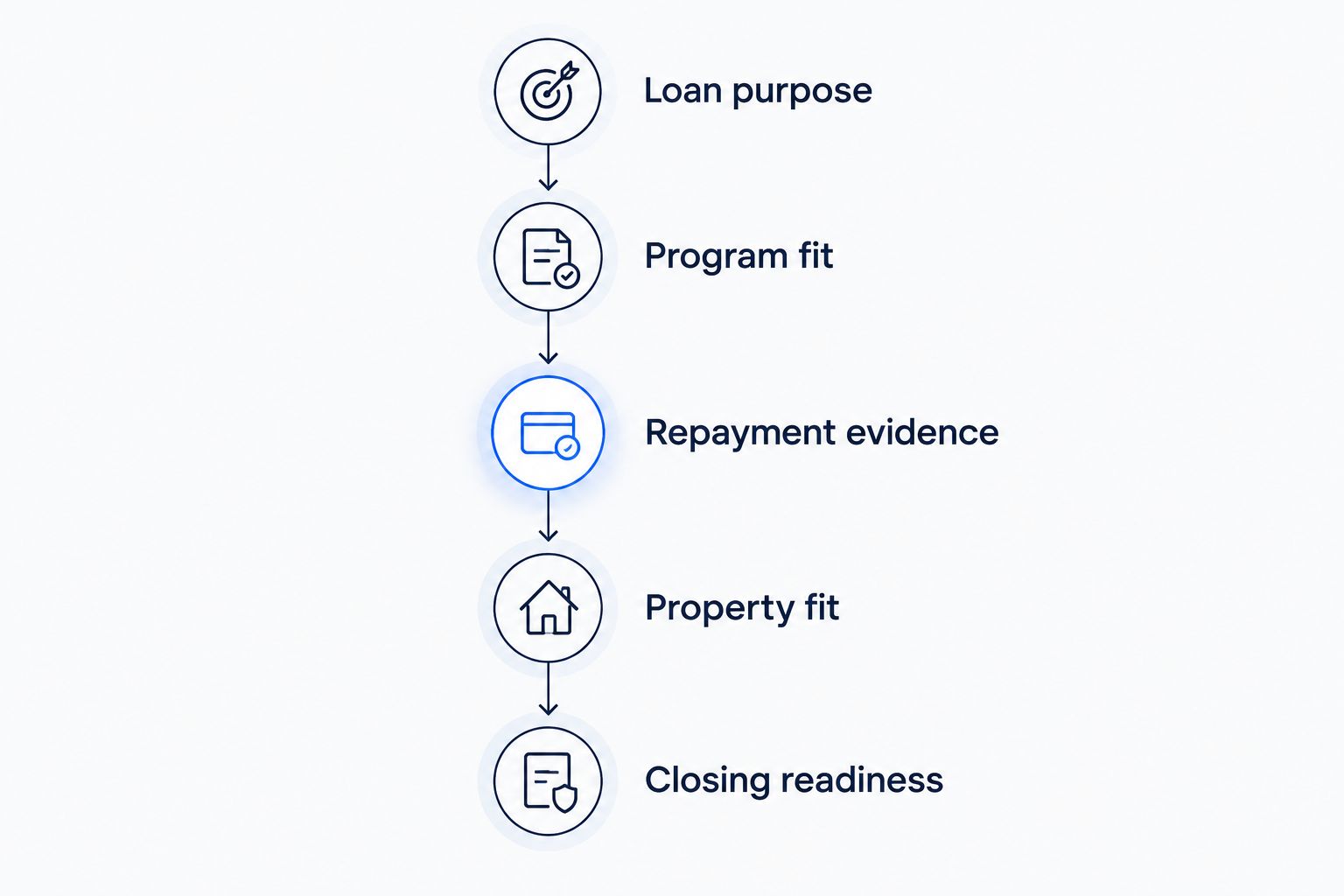
1. Define exactly what the restaurant loan will fund
Start with a spreadsheet, not a lender application. List every proposed use of proceeds and identify the document that supports it: a purchase agreement, equipment quote, contractor estimate, or operating forecast.
Keep business acquisition costs separate from property acquisition costs. If you are buying an existing restaurant, distinguish tangible assets from goodwill and identify obligations that the buyer will assume. That separation gives the lender a transaction it can evaluate rather than a single unexplained funding request.
Do not use the seller’s asking figure as the entire project budget. Include the cash required to operate after the transfer, especially when inventory purchases, payroll, and supplier payments begin before customer receipts settle.
- Separate business acquisition, equipment, improvements, and working capital.
- Identify which costs are estimates and which have written support.
- Record your proposed equity contribution and its source.
- Identify expenses already paid and retain payment evidence.
2. Match the project to SBA 7(a) or SBA 504
Use the SBA’s public program descriptions to make an initial match. SBA 7(a) supports a broader range of eligible business purposes, including working capital and changes of ownership. SBA 504 focuses on eligible major fixed assets and does not fund ordinary working capital or inventory.
SBA 7(a) terms generally extend up to 10 years for working capital and up to 25 years for real estate, depending on the use of proceeds and applicable program requirements. These are program parameters, not promised terms for your restaurant.
For a 2026 transaction involving both a business acquisition and a building, ask how the proposed structure treats each component. Flexvcapital SBA lending is a route to discuss financing fit; restaurant-specific eligibility and terms require an individual credit review.
- Identify the primary use of proceeds before selecting a program.
- Separate working capital from fixed-asset spending.
- Ask whether the transaction includes an eligible ownership change.
- Request written confirmation of the proposed program and structure.
3. Reconcile sales, expenses, and debt service
Build your own cash-flow schedule using tax returns, financial statements, bank records, and point-of-sale reports. Restaurant revenue reports alone do not establish repayment capacity. The lender also needs the expenses and obligations required to generate those sales.
Explain differences between reported sales, merchant deposits, delivery-platform settlements, and bank receipts. Tips, sales taxes, refunds, and settlement timing need clear treatment. An unexplained difference creates a documentation problem even when the underlying business is sound.
Debt service coverage ratio, or DSCR, compares the lender’s accepted measure of available cash flow with required debt payments. Do not assume a universal approval threshold. Ask the lender which calculation, adjustments, and minimum requirements apply to the proposed loan.
- Reconcile annual revenue across tax returns and operating records.
- Separate food, beverage, labor, occupancy, and other operating expenses.
- List existing loans, equipment obligations, and other required payments.
- Document proposed owner-compensation and nonrecurring-expense adjustments.
- Explain seasonal changes rather than averaging them away.
4. Document the lease or owner-occupied property
Read the lease before paying for transaction work. For a leased restaurant, assignment rights, renewal options, permitted use, and landlord consent can determine whether the acquisition can close as planned. A financing approval does not transfer the lease automatically.
For SBA-financed existing real estate, the operating business generally must occupy at least 51% of the property. New-construction projects follow different occupancy requirements. Confirm the applicable rules with the lender rather than treating investment-property financing as interchangeable with owner-occupied business financing.
A restaurant buying its premises in 2026 should also identify the property-owning entity and its relationship to the operating business. Entity structure affects the documentation; it is not an administrative detail to postpone until closing.
- Collect the complete lease, amendments, and renewal provisions.
- Confirm assignment requirements and landlord-consent procedures.
- Document the space the operating business will occupy.
- Identify property ownership and operating-business entities.
- Flag unresolved zoning, permitting, or property-condition issues.
5. Explain ownership, management, and execution risk
Prepare an ownership chart and a concise management summary yourself. For an acquisition, explain who operates the restaurant after closing, whether key managers remain, and how responsibilities transfer from the seller.
SBA rules generally require personal guarantees from owners holding 20% or more of the business. Other guarantees can also be required. The SBA guarantee does not replace your obligation to repay, and a business entity does not automatically shield a guarantor from personal exposure.
New concepts need evidence behind their projections, not just a menu and a sales target. Existing operators should explain what changes under new ownership and which historical results remain relevant after those changes.
- Disclose direct and indirect ownership accurately.
- Provide relevant restaurant-management experience.
- Identify guarantors and prepare requested personal financial information.
- Explain staffing, supplier, and management transitions.
- Document the source of the borrower’s contribution.
6. Compare lender requirements before accepting a structure
Request a written document list and financing outline before committing to a transaction timetable. Compare the proposed loan purpose, repayment structure, collateral, guarantees, conditions, and closing requirements. A headline rate alone does not describe the obligation.
Flexvcapital SBA lending belongs in the comparison when you want a direct commercial lender in New York. The advantage is a direct lending relationship; the limitation is that an advertised loan category does not establish approval for your restaurant. Confirm business-stage, transaction, and geographic eligibility before proceeding.
For a 2026 acquisition, distinguish an initial assessment from a commitment and a commitment from permission to fund. Do not promise the seller a closing date based solely on an early conversation.
- Ask which restaurant transactions the lender will consider.
- Request the proposed repayment and collateral structure in writing.
- Clarify borrower contribution and guarantee requirements.
- Identify third-party reports and outstanding approval conditions.
- Confirm what must happen before funds can be disbursed.
7. Assemble a closing-ready package
Create a shared document index and track each item as requested, submitted, accepted, or outstanding. This manual process makes gaps visible before they become closing problems.
Keep the purchase agreement, lease assignment, entity documents, insurance, and financing conditions consistent. If the buyer entity changes or the transaction allocation shifts, tell the lender immediately. An approved structure is not permission to substitute a different borrower or use of proceeds.
For your 2026 closing, maintain separate milestones for credit approval, document completion, and funding authorization. Restaurant operations also need a transition plan covering licenses, supplier accounts, payroll, and access to sales systems.
- Assign an owner to every outstanding document.
- Track lender conditions separately from seller obligations.
- Confirm required permits and licenses for the buyer’s operation.
- Reconcile the final use-of-proceeds schedule with closing documents.
- Retain operating cash for the post-closing transition.
Compare restaurant financing options
The strongest fit depends on what you are buying and how the business repays the debt. These options are not interchangeable: fixed-asset financing cannot substitute for working capital, and conventional credit does not carry an SBA guarantee.
| Option | Best for | Main advantage | Key limitation |
|---|---|---|---|
| SBA 7(a) | Eligible restaurant acquisitions, working capital, equipment, or mixed business uses | Supports a broad range of eligible business purposes | Requires SBA eligibility and lender underwriting; approval is not automatic |
| SBA 504 | Eligible owner-occupied property and major fixed assets | Aligns financing with qualifying long-lived assets | Does not fund ordinary working capital or inventory |
| Conventional business loan | Restaurants that qualify without an SBA guarantee | Provides a non-SBA financing route | Lender-specific credit, collateral, and repayment requirements apply |
| Equipment financing | A defined equipment purchase | Connects financing to identifiable equipment | Does not solve the full acquisition or operating-cash requirement |
Select the financing structure before selecting the lender. A lender comparison is useful only when every proposal addresses the same transaction and funding needs.
Common mistakes restaurant owners make
Treating seller add-backs as accepted cash flow
A seller’s adjusted earnings schedule is a claim to verify, not an underwriting conclusion. Support each adjustment and explain whether the expense disappears after closing. Owner compensation still matters when you must hire someone to perform the seller’s work.
Confusing an SBA guarantee with borrower protection
The SBA guarantee supports the lender under the program’s rules. It does not cancel the debt, remove required guarantees, or eliminate collection exposure. Read the proposed obligations before signing.
Ignoring lease transfer and license requirements
You cannot assume a restaurant’s lease, permits, or licenses transfer with the business. Requirements depend on the agreement, issuing authority, and transaction structure. Resolve the transfer path before setting an unconditional closing deadline.
Financing the purchase but underfunding operations
An acquisition budget that excludes operating cash is incomplete. Build a post-closing cash forecast that includes payroll, inventory, occupancy, and required debt payments. Separate expected improvements from revenue already supported by operating history.
FAQ
Can I get an SBA loan to buy an existing restaurant?
Yes, an eligible restaurant acquisition can qualify for SBA 7(a) financing. The lender evaluates the business, borrower, transaction structure, repayment capacity, and applicable SBA requirements; the acquisition itself does not guarantee approval.
Is SBA 7(a) or SBA 504 better for a restaurant?
SBA 7(a) is the broader fit for eligible business acquisitions and working capital, while SBA 504 fits eligible major fixed assets. Choose based on the use of proceeds, not the restaurant category alone.
Can a new restaurant qualify for an SBA loan?
A new restaurant can qualify if it meets SBA requirements and the lender accepts the startup transaction. Expect scrutiny of management experience, documented project costs, borrower contribution, and the assumptions supporting repayment.
Do restaurant owners have to personally guarantee SBA loans?
Owners holding 20% or more of the business generally must provide personal guarantees under SBA rules. Additional guarantees can be required, so confirm the obligations for every owner and entity in the proposed structure.
Can an SBA loan pay for restaurant working capital?
SBA 7(a) can finance eligible working-capital needs; SBA 504 does not fund ordinary working capital or inventory. Show how the requested operating cash connects to the restaurant’s forecast and documented business needs.
How long does a restaurant SBA loan take to close?
There is no single closing timeline for every restaurant SBA loan. Credit review, lease consent, business valuation, property reports, and outstanding conditions affect the schedule; obtain transaction-specific milestones from the lender.
What should I prepare before contacting a restaurant SBA lender in 2026?
Prepare a use-of-proceeds schedule, ownership information, available financial records, and the relevant purchase or lease documents. For a startup, include supported projections and management experience; for an acquisition, include seller financials and transition details.
One last thing
Underwrite the restaurant you will operate, not merely the restaurant the seller operated. Replacing the seller’s labor, changing opening hours, or revising the menu changes the repayment case. Show those changes explicitly before treating historical earnings as your future debt-paying capacity.


