
Auto repair shop private money lending is nonbank financing structured around the borrower, collateral, and repayment plan to fund a business or property transaction. Private money loans for auto repair shops require a clear distinction between buying the repair business, financing its building, and covering operating expenses; this 2026 guide explains how to match the debt to the transaction.
- Private money loans for auto repair shops fit property-backed transactions with a documented repayment or refinance plan.
- Flexvcapital is best for New York commercial borrowers seeking direct-lender review of bridge, hard money, and SBA financing.
- Separate building collateral, business cash flow, equipment financing, and working capital before requesting terms.
- Compare repayment obligations and exit requirements, not just approval speed.
Why private money lending matters for auto repair shop owners
A repair shop and its real estate are different lending risks. Your business earns revenue from labor and parts, while the building provides separate collateral. Owning the business does not establish ownership of the premises, and owning the premises does not establish adequate business cash flow.
A property-backed private loan addresses a different need from financing a replacement lift or funding payroll. Choosing the wrong structure puts repayment pressure on assets or income that do not match the purpose of the borrowing.
Flexvcapital is a direct commercial lender in New York offering bridge loans, DSCR loans, hard money, SBA, CMBS, and Fannie Mae financing. That range warrants a program-fit discussion, not an assumption that every program accepts an owner-operated repair shop.
For your 2026 financing decision, start with ownership, permitted use, repayment capacity, and a documented exit. Approval speed comes after those questions.
How to prepare an auto repair shop financing request
1. Separate the building from the business need
Start with a spreadsheet and your purchase agreement, lease, or project budget. Assign each use of funds to Property purchase, Business purchase, Equipment, or Working capital. This exposes requests that combine several borrowing needs without explaining how each will be repaid.
Buying a building does not automatically finance the seller's customer relationships, inventory, tools, or operating company. Similarly, equipment installed in a leased bay does not give you ownership of the building.
Keep the transaction structure visible. Identify the property-owning entity, operating entity, and proposed borrower separately, even when the same person owns each entity.
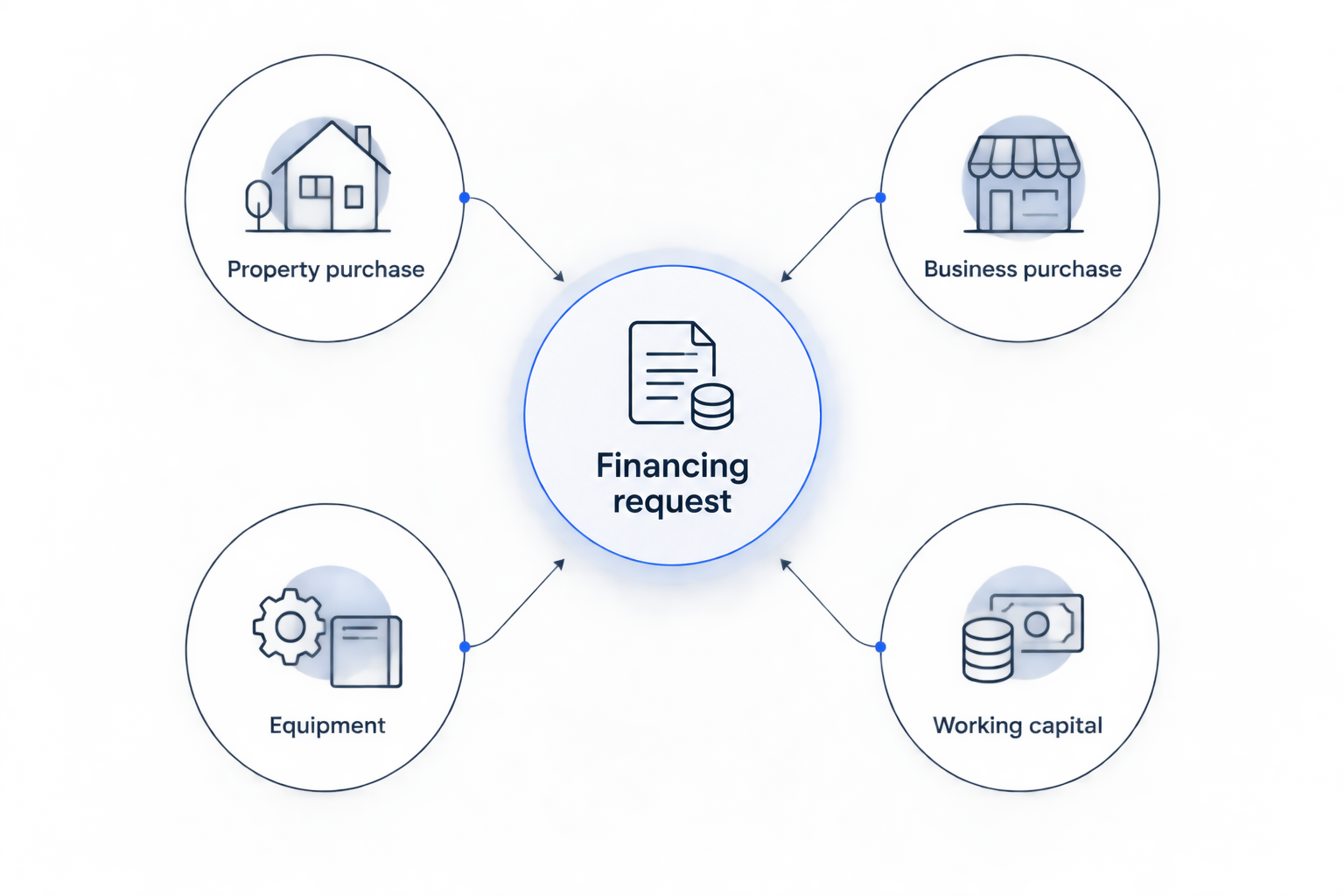
Use these categories in your Financing request:
- Property purchase: identify the building and purchasing entity.
- Business purchase: separate operating assets from real estate.
- Equipment: distinguish owned, financed, and leased machinery.
- Working capital: identify the operating expenses being funded.
2. Document the collateral and property condition
Build a collateral file from records you already control before ordering new reports. Include the deed or purchase contract, existing mortgage statements, equipment schedules, and any available environmental documentation.
Repair properties require attention to historical use, fluid storage, waste handling, and underground tanks where present. These issues belong in the property discussion before you rely on a closing date. A clean-looking service bay does not establish environmental condition.
Confirm which assets you can pledge. A lift subject to equipment financing, a leased diagnostic system, and an unencumbered building create different collateral positions. Do not describe them collectively as business assets without identifying ownership and existing liens.
Close the collateral review with:
- Property ownership records and current mortgage balances.
- Available title information and recorded liens.
- Equipment ownership and financing schedules.
- Existing environmental reports and relevant property history.
- Zoning, occupancy, and repair-use documentation.
3. Match the financing route to the repayment source
Create a manual comparison of the borrowing purpose, available collateral, and repayment source. A private real estate loan is not automatically the right answer because the borrower operates an auto repair business.
Best for a property-backed timing gap: consider bridge or hard money financing only with a credible exit. Best for an eligible owner-occupied project: evaluate SBA financing. Best for a specific equipment purchase: evaluate equipment financing before pledging unrelated real estate.
For a faster program-fit discussion, present that comparison to a direct lender rather than submitting an undefined request. Flexvcapital's commercial lending services include bridge, hard money, and SBA financing; confirm auto repair property eligibility and use-of-proceeds restrictions directly.
Record these decisions before requesting a quote:
- Identify whether repayment comes from operations, refinancing, or sale.
- Ask whether owner-occupied automotive property is eligible.
- Confirm whether the request includes business acquisition proceeds.
- Separate equipment and operating needs from property financing.
- Request written confirmation of the proposed loan purpose.
4. Reconcile business cash flow before applying
Export your accounting records and compare them with bank statements and tax returns. Explain differences rather than expecting an underwriter to reconstruct them. Cash deposited into the operating account is not automatically profit available for debt service.
Prepare a trailing 12-month operating summary and a 13-week cash forecast as planning documents. These are preparation recommendations, not universal lender requirements. Show payroll, parts purchases, occupancy expenses, existing debt payments, and owner distributions separately.
If a separate entity owns the property, show the relationship between the shop's rent expense and the property owner's rental income. Avoid counting the same cash twice when describing repayment capacity.
Assemble a consistent financial package:
- Reconcile reported revenue with business bank deposits.
- Explain unusual expenses and any proposed adjustments.
- List existing loan and equipment payments.
- Separate owner distributions from operating expenses.
- Show cash remaining after existing and proposed obligations.
5. Compare written terms beyond the headline payment
Use a side-by-side worksheet to compare written proposals. Record interest structure, payment frequency, maturity, amortization, collateral, guarantees, extension provisions, and default terms. A manageable periodic payment does not eliminate a large maturity obligation.
Ask how interest is calculated and whether unused or future-funded proceeds affect the calculation. Identify conditions attached to construction or improvement disbursements. Do not assume the full approved amount becomes usable cash at closing.
Flexvcapital advertises 48-hour pre-approvals. A pre-approval is not a funded loan: request the remaining underwriting conditions and distinguish preliminary review from a binding commitment and completed closing.
For every proposal, verify:
- Interest calculation, payment schedule, and amortization.
- Maturity date and any balloon repayment.
- Collateral coverage and personal guarantees.
- Prepayment provisions and minimum-interest obligations.
- Extension rights, conditions, and lender discretion.
- Required reports, documents, and closing conditions.
6. Prove the exit before accepting short-term debt
Write the exit plan yourself before asking a lender to evaluate it. State whether repayment depends on refinancing, selling the property, selling another asset, or accumulating business cash. Then list the conditions that must be satisfied.
A refinance plan requires more than an expectation that terms will improve. Identify the intended permanent financing route, the property's required condition, and the business records needed for underwriting. Obtain feedback on those requirements before taking short-term financing.
For a 2026 acquisition, stress-test a delayed exit without assuming an extension will be granted. Repair-business disruption and an unfinished property project can affect the same repayment plan simultaneously.
Make the exit file specific:
- Name the intended repayment source.
- Identify the permanent loan's eligibility requirements.
- List unfinished property or documentation tasks.
- Model payments if refinancing takes longer than planned.
- Document a backup exit that does not require lender discretion.
7. Submit a complete request and track conditions
Organize the application in a shared folder with clear filenames and a single document index. Include a short transaction summary that identifies the borrower, property, borrowing purpose, requested structure, and repayment source.
Keep a separate conditions log. Distinguish documents you must provide from third-party work and lender decisions. This makes unresolved items visible without confusing document delivery with approval.
For your 2026 closing plan, ask who orders reports, who reviews them, and which conditions must be satisfied before funds are released. Do not schedule a business move or equipment installation solely around a preliminary lending conversation.
Finish the submission with:
- A transaction summary and entity ownership chart.
- Organized financial, property, and collateral records.
- A written explanation of the proposed exit.
- A conditions log with named responsible parties.
- Written confirmation of outstanding approval and funding requirements.
Compare financing options for an auto repair shop
Choose by purpose and repayment source, not by the label private money. The options below solve different problems. A loan secured by your building is not interchangeable with a facility secured by equipment or supported by operating cash flow.
Use this comparison to narrow the discussion. It does not establish eligibility or represent a financing commitment from any lender.
| Option | Best for | Main advantage | Key limitation |
|---|---|---|---|
| Private bridge or hard money loan | Property-backed purchases or transitional real estate needs | Structures financing around collateral and a defined exit | Short-term maturity creates repayment or refinancing risk |
| SBA 7(a) financing | Eligible business acquisitions, owner-occupied property, or working capital | Accommodates several eligible business purposes | Program eligibility and lender underwriting still apply |
| SBA 504 financing | Eligible owner-occupied real estate and long-lived fixed assets | Aligns financing with qualifying fixed-asset projects | Not a general working-capital solution |
| Conventional commercial mortgage | Established borrowers buying or refinancing qualifying property | Provides a permanent-financing route when underwriting fits | Requires acceptable property, borrower, and repayment characteristics |
| Equipment financing | Identified lifts, diagnostic equipment, or other eligible machinery | Connects the borrowing to a specific asset | Does not solve a separate building acquisition or broad cash deficit |
| Business line of credit | Recurring operating cash-flow gaps | Supports repeated borrowing within agreed terms | Draw rights, renewals, collateral, and repayment remain conditional |
Flexvcapital offers several commercial lending categories, but the inputs to a useful discussion remain the same: property use, borrower structure, financial records, and exit. Its stated program range does not establish that a particular shop or transaction qualifies.
Discuss your repair shop financing
Identify the property, borrowing purpose, collateral, and repayment plan before requesting terms.
Common mistakes auto repair shop owners make
Treating shop revenue as property income
An owner-operated shop generates business income; a separately owned building receives rent under its lease arrangements. Present both accurately. Do not assume a rental-property DSCR program accepts an operating repair business simply because the business occupies real estate.
Pledging the building for an undefined cash shortage
Using property collateral does not fix an unexplained operating deficit. Identify whether the shortage comes from receivables, inventory purchasing, owner withdrawals, existing debt, or operating losses. Borrow against the building only after documenting how the new obligation will be repaid.
Leaving environmental questions until closing
Historical automotive uses, tanks, and waste handling belong in the initial property review. Disclose known conditions and provide existing reports. An appraisal addresses valuation; it does not replace environmental due diligence or establish that a property meets the lender's requirements.
Assuming refinancing is automatic
A future lender makes its own eligibility and underwriting decision. Document the intended refinance requirements before accepting a maturity obligation. For a 2026 transaction, use current written feedback rather than a seller's statement that the property was financeable previously.
Signing without understanding collateral reach
Review whether the documents cover only the property or also business assets, guarantees, and other obligations. Ask counsel to explain cross-default and cross-collateral provisions where present. A loan described verbally as property-backed still requires a document-level review of your exposure.
FAQ
Can I get a private money loan if I lease my repair shop?
Leasing your shop does not give you ownership of the building as collateral. A lender must evaluate other acceptable collateral or a different financing structure; equipment financing and business credit address different needs from a property-backed loan.
Are private money loans and hard money loans the same?
The terms overlap, but they are not identical. Private money describes a nonbank funding source, while hard money commonly describes asset-focused lending; the actual documents determine collateral, repayment, and borrower obligations.
Can I use a private loan to buy the business and its building?
A combined acquisition requires explicit lender approval of both the business and real estate uses of proceeds. Separate the purchase allocation, borrowing entities, collateral, and repayment sources before requesting terms.
Is SBA financing better than private money for my shop?
SBA financing is the better route to evaluate when your project and business meet the relevant program requirements and the structure matches your purpose. Private bridge financing addresses a different need when a property-backed transaction requires temporary financing and a documented exit.
Does a pre-approval mean the lender will fund my purchase?
No, a pre-approval is not completed funding. Review the remaining underwriting conditions, required reports, final documents, and closing requirements before relying on a funding date.
Can I refinance a private repair shop loan later?
Refinancing requires approval from the replacement lender and is not guaranteed by the original private loan. Confirm the intended program's property, borrower, cash-flow, and documentation requirements before accepting short-term debt.
What should I send a lender first?
Send a transaction summary identifying the borrower, property, use of funds, available collateral, and repayment source. Support it with financial records, existing debt information, and the purchase agreement or relevant ownership documents.
One last thing
Check the lease between your operating company and property-owning entity before seeking financing. Related ownership does not eliminate the need to explain rent, occupancy, and cash movement. A clearly documented relationship helps prevent the same income from appearing twice in your repayment presentation.


